05.06.2026
Time to read:
5
min
Risks of Mobile App Development
Guides
Insights
Mobile app development is a complex and multifaceted process. Despite how simple it may seem at the start, every interface element hides a range of important factors that can affect the success of the project.
Mistakes in planning, choosing the wrong tools, hiring the wrong development team, or having an unclear business goal can all lead to lost time and resources. To minimize risks, it is essential to anticipate them early and organize the workflow properly from the very beginning.
Let’s look at the 9 key risks in mobile app development and ways to reduce them.



Underestimating the Scope of Work and the Lack of a Clear Business Goal
Underestimating the scale of a project often leads to major delays: 66% of projects exceed their original timelines due to inaccurate estimates. At first, an app may seem simple to build, but as development progresses, additional components begin to surface: backend infrastructure, an admin panel, third-party integrations, push notifications, and more. These are tasks that often were not considered during the initial planning stage.
How to reduce the risks
To avoid this, work should be planned clearly and in stages. It is important to carry out a thorough task assessment at the start and break the work down into manageable phases. At this stage, it is also worth deciding on the project architecture in advance and setting clear rules for team collaboration. This helps prevent misunderstandings and saves time on future revisions and improvements.
More than 70% of mobile apps fail to achieve their business goals because of vague objectives and poorly defined tasks, which leads to products that do not meet real market needs. Without a clearly formulated goal, the project risks becoming a useless product. If the app does not solve the target audience’s problem, users will not return.

How to reduce the risks
At the initial stage of development, you need to answer the key questions:
- Why is this app being developed?
- Who are our users?
- Which user problems should the app solve?
This approach helps you better understand audience needs, build the right business model, and reduce risks in mobile app development.
One of the most effective tools for this analysis is a Customer Journey Map (CJM), which visualizes the user’s path from the very first interaction with the app to regular use. This tool helps create a product that will be in demand on the market and deliver the desired results.
Mistakes at the App Design Stage
Risks at the mobile app design stage can be minimized if you account in advance for the key aspects of user interaction. This stage is not limited to thinking through system functionality — it is equally important to create a convenient interface that is intuitive and easy to use.
Poorly designed apps have a 50% higher chance of being deleted within the first 30 days.
Ignoring these aspects can result in an app that feels complicated to users. The result is dissatisfaction and, ultimately, user loss.
How to minimize the risks
To avoid these problems, use prototyping at every design stage. Even the simplest wireframes can help identify weak points and errors that can be fixed before development begins. By testing prototypes on real users, you can refine the interface so that it feels intuitive and convenient from the very first launch. This minimizes the likelihood of problems later in development and in the ongoing management of the finished system.
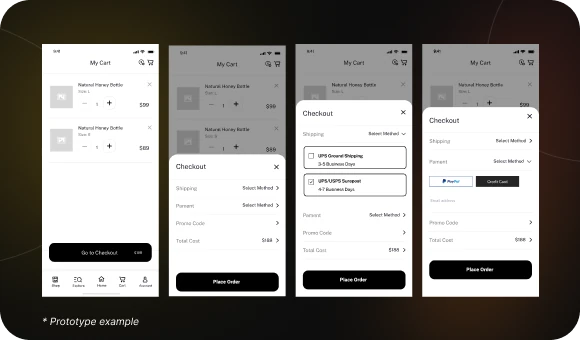
We also recommend preparing a project risk register when creating a mobile app. Describe potential problems in detail, the likelihood of their occurrence, and ways to solve them. This will help keep the project under control and prepare for unexpected situations in advance.
Technical Risks in Mobile Development
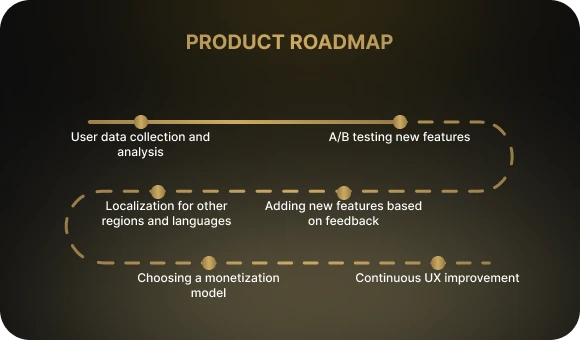
Technical risks in mobile app development often do not reveal themselves at the beginning, but they can become critical to the project’s success. Choosing the wrong technologies or technical stack can lead to unpredictable problems: from loss of app stability to difficulties with scalability and maintenance. This inevitably causes additional costs and slows product growth.
How to minimize the risks
Conduct an architecture audit at an early stage. You need to be confident that the chosen technologies meet both current and future requirements and will allow the product to scale as it grows. Involving experienced specialists — such as a CTO or tech lead — helps identify and eliminate potential issues before they negatively affect the project.
Risks Related to the Development Team
The development team is one of the key factors determining project success. Mistakes such as choosing a team without the required expertise, trying to save money on specialists, or hiring freelancers without sufficient experience increase the risks in mobile app development and can lead to critical problems. This may include code failures, missed deadlines, or even the sudden disappearance of the team.
How to minimize the risks
Make sure the team has sufficient expertise. Start by reviewing their portfolio, testimonials, and recommendations. We recommend beginning with an MVP to evaluate whether the team meets your expectations. Regular meetings and detailed task discussions will help keep the process under control, give you visibility into the progress, and allow you to resolve issues in time.
Financial Risks
Budgeting mistakes and unexpected expenses can lead to a project being paused or to planned functionality being cut. This can result in extra costs and delays.

How to minimize the risks
Include additional reserves in the budget to cover unforeseen expenses. Financial planning with a reserve fund reduces the risk of project interruption by 40%. We recommend fixing the cost at the MVP stage to estimate future expenses more accurately, improve budget management, and avoid financial surprises in the later phases.
Marketing Risks: Failing to Reach the Target Audience
Despite all efforts, a project may fail to reach its target audience if that audience was not clearly defined in advance and user retention was not planned. Cases like this often end in a weak launch and lost investment. Without effective marketing, apps lose up to 90% of potential users because they do not appear in search results or fail to attract attention.
How to minimize the risks
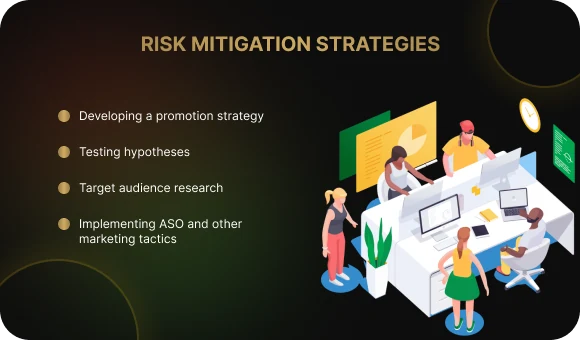
Develop a marketing strategy from the very beginning. Alongside product development, actively work on attracting and retaining users. Research the preferences of your target audience, test different strategies and hypotheses, and use promotion techniques such as ASO to win users early and maintain interest after launch. Investments in ASO can increase search visibility by 60% and usually pay off within 2–3 months.
Legal Risks
Violations in legal compliance — for example, in the area of personal data protection — can lead to fines, account blocks, and loss of customer trust.
How to minimize the risks
Work with lawyers to ensure compliance with all legal requirements. Develop a clear and transparent privacy policy and pay close attention to the security of user data.
Risks When Publishing in App Stores
Failure to comply with the requirements of platforms such as the App Store and Google Play can lead to financial losses, wasted marketing spending, and lost time spent fixing issues. More than 30% of apps are rejected by the App Store and Google Play due to non-compliance with platform rules, including insufficient functionality or privacy policy violations.
How to minimize the risks
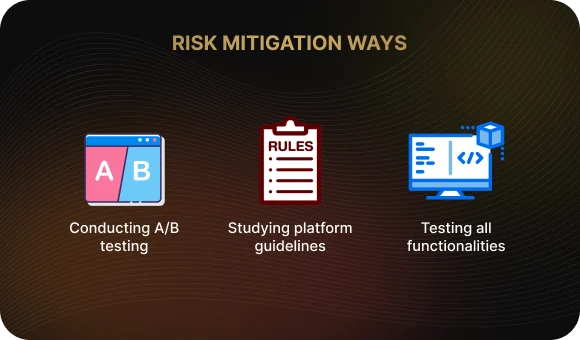
Study platform requirements in advance and create a checklist to verify that your product meets all standards. Conduct regular reviews and use A/B testing in TestFlight and Google Play Console to test features and gather feedback before final publication. Pre-launch compliance testing reduces the risk of rejection by 50%.
Conclusion
Mobile app development is a multifaceted and highly detailed process. It is important not only to create a quality product, but also to properly assess all possible risks at every stage. Mistakes in estimating the scope of work, vague business objectives, technical failures, the wrong team, financial miscalculations, and legal challenges can all stand in the way of project success.
Success depends on careful planning at every stage — from working through the idea and the Discovery phase to testing and promotion. This approach helps reduce risks and create a product that truly meets user needs.
Planning to launch a mobile app without unnecessary risks? The Beetrail team can help you build a high-quality product that attracts users and is ready for growth.
Ready to get started? Write to us — we will discuss your idea and suggest the best plan for a successful launch.
Underestimating the Scope of Work and the Lack of a Clear Business Goal
Underestimating the scale of a project often leads to major delays: 66% of projects exceed their original timelines due to inaccurate estimates. At first, an app may seem simple to build, but as development progresses, additional components begin to surface: backend infrastructure, an admin panel, third-party integrations, push notifications, and more. These are tasks that often were not considered during the initial planning stage.
How to reduce the risks
To avoid this, work should be planned clearly and in stages. It is important to carry out a thorough task assessment at the start and break the work down into manageable phases. At this stage, it is also worth deciding on the project architecture in advance and setting clear rules for team collaboration. This helps prevent misunderstandings and saves time on future revisions and improvements.
More than 70% of mobile apps fail to achieve their business goals because of vague objectives and poorly defined tasks, which leads to products that do not meet real market needs. Without a clearly formulated goal, the project risks becoming a useless product. If the app does not solve the target audience’s problem, users will not return.
How to reduce the risks
At the initial stage of development, you need to answer the key questions:
- Why is this app being developed?
- Who are our users?
- Which user problems should the app solve?
This approach helps you better understand audience needs, build the right business model, and reduce risks in mobile app development.
One of the most effective tools for this analysis is a Customer Journey Map (CJM), which visualizes the user’s path from the very first interaction with the app to regular use. This tool helps create a product that will be in demand on the market and deliver the desired results.
Mistakes at the App Design Stage
Risks at the mobile app design stage can be minimized if you account in advance for the key aspects of user interaction. This stage is not limited to thinking through system functionality — it is equally important to create a convenient interface that is intuitive and easy to use.
Poorly designed apps have a 50% higher chance of being deleted within the first 30 days.
Ignoring these aspects can result in an app that feels complicated to users. The result is dissatisfaction and, ultimately, user loss.
How to minimize the risks
To avoid these problems, use prototyping at every design stage. Even the simplest wireframes can help identify weak points and errors that can be fixed before development begins. By testing prototypes on real users, you can refine the interface so that it feels intuitive and convenient from the very first launch. This minimizes the likelihood of problems later in development and in the ongoing management of the finished system.
We also recommend preparing a project risk register when creating a mobile app. Describe potential problems in detail, the likelihood of their occurrence, and ways to solve them. This will help keep the project under control and prepare for unexpected situations in advance.
Technical Risks in Mobile Development
Technical risks in mobile app development often do not reveal themselves at the beginning, but they can become critical to the project’s success. Choosing the wrong technologies or technical stack can lead to unpredictable problems: from loss of app stability to difficulties with scalability and maintenance. This inevitably causes additional costs and slows product growth.
How to minimize the risks
Conduct an architecture audit at an early stage. You need to be confident that the chosen technologies meet both current and future requirements and will allow the product to scale as it grows. Involving experienced specialists — such as a CTO or tech lead — helps identify and eliminate potential issues before they negatively affect the project.
Risks Related to the Development Team
The development team is one of the key factors determining project success. Mistakes such as choosing a team without the required expertise, trying to save money on specialists, or hiring freelancers without sufficient experience increase the risks in mobile app development and can lead to critical problems. This may include code failures, missed deadlines, or even the sudden disappearance of the team.
How to minimize the risks
Make sure the team has sufficient expertise. Start by reviewing their portfolio, testimonials, and recommendations. We recommend beginning with an MVP to evaluate whether the team meets your expectations. Regular meetings and detailed task discussions will help keep the process under control, give you visibility into the progress, and allow you to resolve issues in time.
Financial Risks
Budgeting mistakes and unexpected expenses can lead to a project being paused or to planned functionality being cut. This can result in extra costs and delays.
How to minimize the risks
Include additional reserves in the budget to cover unforeseen expenses. Financial planning with a reserve fund reduces the risk of project interruption by 40%. We recommend fixing the cost at the MVP stage to estimate future expenses more accurately, improve budget management, and avoid financial surprises in the later phases.
Marketing Risks: Failing to Reach the Target Audience
Despite all efforts, a project may fail to reach its target audience if that audience was not clearly defined in advance and user retention was not planned. Cases like this often end in a weak launch and lost investment. Without effective marketing, apps lose up to 90% of potential users because they do not appear in search results or fail to attract attention.
How to minimize the risks
Develop a marketing strategy from the very beginning. Alongside product development, actively work on attracting and retaining users. Research the preferences of your target audience, test different strategies and hypotheses, and use promotion techniques such as ASO to win users early and maintain interest after launch. Investments in ASO can increase search visibility by 60% and usually pay off within 2–3 months.
Legal Risks
Violations in legal compliance — for example, in the area of personal data protection — can lead to fines, account blocks, and loss of customer trust.
How to minimize the risks
Work with lawyers to ensure compliance with all legal requirements. Develop a clear and transparent privacy policy and pay close attention to the security of user data.
Risks When Publishing in App Stores
Failure to comply with the requirements of platforms such as the App Store and Google Play can lead to financial losses, wasted marketing spending, and lost time spent fixing issues. More than 30% of apps are rejected by the App Store and Google Play due to non-compliance with platform rules, including insufficient functionality or privacy policy violations.
How to minimize the risks
Study platform requirements in advance and create a checklist to verify that your product meets all standards. Conduct regular reviews and use A/B testing in TestFlight and Google Play Console to test features and gather feedback before final publication. Pre-launch compliance testing reduces the risk of rejection by 50%.
Conclusion
Mobile app development is a multifaceted and highly detailed process. It is important not only to create a quality product, but also to properly assess all possible risks at every stage. Mistakes in estimating the scope of work, vague business objectives, technical failures, the wrong team, financial miscalculations, and legal challenges can all stand in the way of project success.
Success depends on careful planning at every stage — from working through the idea and the Discovery phase to testing and promotion. This approach helps reduce risks and create a product that truly meets user needs.
Planning to launch a mobile app without unnecessary risks? The Beetrail team can help you build a high-quality product that attracts users and is ready for growth.
Ready to get started? Write to us — we will discuss your idea and suggest the best plan for a successful launch.