
07.06.2026
Time to read:
4
min
Design vs. Functionality: Which matters more in a mobile app?
Guides
Insights
UI/UX design
When we talk about mobile app development, one question always comes up: what matters more — design or functionality? What should you focus on? It’s like choosing between taste and nutrition in a salad: ideally, you want it to be both appealing and полезный. Let’s look at how to strike the right balance so that everything works out well and users stay happy.


First Impressions Are Like a Blind Date
We all know that first impressions are formed in just a few seconds. A beautiful and stylish design instantly wins users over, like the perfect outfit on a date. The vast majority of users form their opinion about an app’s convenience and reliability based on how it looks. So if an app appears attractive, it has a much better chance of success — yes, a beautiful interface really does work like magic.

Visual Identity as Part of the Brand
If design is the face of an app, then strong visuals are its charm and confidence. This helps users remember your brand, and if the product is also visually appealing, they are much more likely to come back. It is a proven fact that users stop interacting with a product if its visual style does not meet their expectations. That is why app design is more than decoration — it is part of your brand story.
Usability — Because We All Just Want Life to Be Easier
Even the most elegant interface loses its magic if the app is difficult to use, like trying to solve a crossword puzzle in Chinese. Users value smooth and intuitive experiences, where every button is exactly where they expect it to be. If this important factor is ignored, users simply will not return after a negative experience.
Let’s be honest — everyone has had that kind of experience, and we all know how it usually ends for that product. That is why it is important to think not only about beauty, but also about usability, so that every user can easily achieve what they came for.
Adaptability and Accessibility — For Everyone
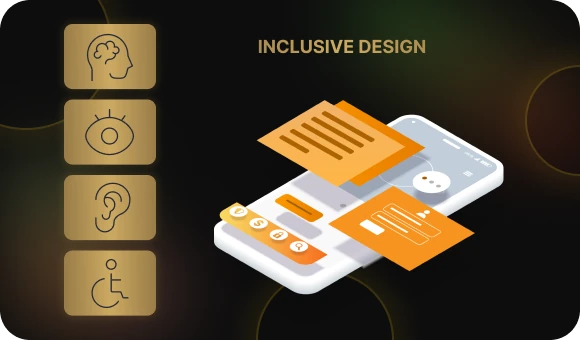
Today’s users are demanding, and sometimes a little picky, so they expect an app to work flawlessly on any device — from a phone to a smartwatch. Even better if the app is accessible to people with disabilities, because it is important to care about everyone. According to WebAIM, 98% of popular websites have accessibility issues, so inclusive design is not just a trendy phrase — it is a real opportunity to make your product available to everyone and expand your audience.
Conclusion
By focusing on both design and functionality, you can create a product that delights users both visually and practically.
So which is better: design or functionality? It is like choosing between the music and the lyrics in a song — together, they sound perfect. Use these principles, and your app will become not just a useful tool, but a favorite assistant for users and a reliable companion for you on the way to winning new customers.
First Impressions Are Like a Blind Date
We all know that first impressions are formed in just a few seconds. A beautiful and stylish design instantly wins users over, like the perfect outfit on a date. The vast majority of users form their opinion about an app’s convenience and reliability based on how it looks. So if an app appears attractive, it has a much better chance of success — yes, a beautiful interface really does work like magic.

Visual Identity as Part of the Brand
If design is the face of an app, then strong visuals are its charm and confidence. This helps users remember your brand, and if the product is also visually appealing, they are much more likely to come back. It is a proven fact that users stop interacting with a product if its visual style does not meet their expectations. That is why app design is more than decoration — it is part of your brand story.

Usability — Because We All Just Want Life to Be Easier
Even the most elegant interface loses its magic if the app is difficult to use, like trying to solve a crossword puzzle in Chinese. Users value smooth and intuitive experiences, where every button is exactly where they expect it to be. If this important factor is ignored, users simply will not return after a negative experience.
Let’s be honest — everyone has had that kind of experience, and we all know how it usually ends for that product. That is why it is important to think not only about beauty, but also about usability, so that every user can easily achieve what they came for.
Adaptability and Accessibility — For Everyone
Today’s users are demanding, and sometimes a little picky, so they expect an app to work flawlessly on any device — from a phone to a smartwatch. Even better if the app is accessible to people with disabilities, because it is important to care about everyone. According to WebAIM, 98% of popular websites have accessibility issues, so inclusive design is not just a trendy phrase — it is a real opportunity to make your product available to everyone and expand your audience.

Conclusion
By focusing on both design and functionality, you can create a product that delights users both visually and practically.
So which is better: design or functionality? It is like choosing between the music and the lyrics in a song — together, they sound perfect. Use these principles, and your app will become not just a useful tool, but a favorite assistant for users and a reliable companion for you on the way to winning new customers.