02.06.2026
Time to read:
9
min
Mobile app promotion: advertising, marketing, strategies, and methods
Guides
Imagine your friend opens a small coffee shop on a quiet street and patiently waits for crowds of customers to show up. But no one comes: nearby, there are giant chain brands and trendy places that have been well known for years. You wonder why he is not running ads, offering promotions, or thinking about marketing at all. It seems obvious he will fail. Now think about your app. It may be convenient, attractive, and genuinely useful — but without a promotion strategy, the outcome will be exactly the same. And the mobile app market is far more competitive than any street full of coffee shops.
According to Statista, by the end of 2024 there were about 2.87 million apps in Google Play and around 1.96 million in the Apple App Store. Combined, that is more than 4.8 million active products, and the number keeps growing. Competition is extreme: according to Medium, about 68% of apps in Google Play do not even reach 1,000 installs. Without marketing and a systematic promotion strategy, users simply will not discover your product.
Trying everything at once and launching random ad campaigns chaotically makes no sense — promotion needs to be planned systematically, with every step built into a single growth strategy. In this article, we will look at how to promote mobile apps and achieve real growth. We will cover how an app promotion strategy is built, which marketing methods work best at different stages, where it makes the most sense to advertise, and how to use ASO, paid and organic channels, analytics, and retention to grow your audience.
How to Build the Foundation for Promotion
Before investing in mobile app promotion, you need to build a solid foundation — understand who the product is for, who you will be competing against, and what makes your app different. Without that groundwork, advertising campaigns turn into shooting in the dark.
1. Understand who you are building the product for
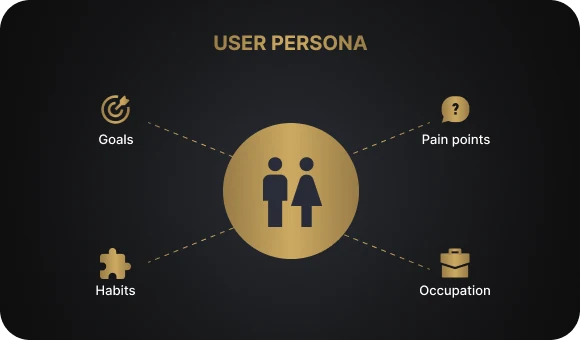
Target audience and competitor analysis is the starting point of promotion. At this stage, it is important to understand who your users are, what goals and habits they have, and what problems the app should solve for them. Create several user personas — generalized profiles that reflect real behavioral scenarios. This will help you speak your audience’s language and use those insights to shape advertising around specific needs.
At the same time, study the market: what apps already exist, which features are in demand, and what frustrates users. According to Adjust, a deep analysis of the audience and competitive landscape helps identify untapped niches, define product positioning more accurately, and reduce mistakes after launch.
Examples of user personas:
Ivan, 32. Works in an office, enjoys sports, and goes to the gym regularly. He wants to track his nutrition so his workouts deliver results. Existing nutrition-tracking apps feel too complex and overloaded for him.
Evgenia, 21. A student constantly busy with classes and part-time work. She needs a time-planning tool, but existing solutions are expensive, inconvenient, and do not help her build a real system.
2. Shape your USP (unique selling proposition)
The next step is to define why a user should choose your app over others. A USP shows the product’s real value and what sets it apart from competitors. This could be a new feature, a more user-friendly interface, better terms, original content, or a distinctive communication style.
For example, if there are already dozens of sleep trackers on the market, your app may stand out not through the number of metrics it offers, but through clear visualization, AI-powered personalized recommendations, a branded mascot, or even short bedtime audio stories. Your unique selling proposition becomes the foundation of all communication — from the app store description to advertising campaigns — and helps create a consistent product image that users remember.
3. Create a landing page
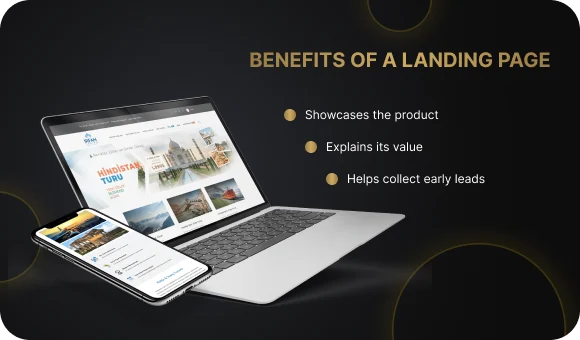
Another important preparation tool is a landing page. Before the app appears in the stores, the website acts as a storefront: it presents the product, explains its value, and helps collect early contacts. On the landing page, you can place a form for release notifications, screenshots, a video preview, and a block with testimonials from test users. All of this helps build a core audience before launch and increases trust in the product.
A landing page also helps attract SEO traffic: while the app itself is not yet indexed in search, the website makes it possible for users to find information about it through relevant search queries. This approach turns the waiting and development stage into a prepared launch base and helps accelerate promotion from day one.
ASO: How to Make the App Store and Google Play Work for You
ASO is the process of improving your app page in the App Store and Google Play so that it looks attractive, instantly communicates the product’s value, and motivates users to install it. This is one of the key ways to promote an app without a budget — simply by designing the store listing correctly.
You work with every element: the title, description, icon, screenshots, video, and reviews — everything should inspire trust and interest. A polished page appears more often in search results, improves the app’s ranking, and increases the number of organic installs.
How to apply ASO in practice
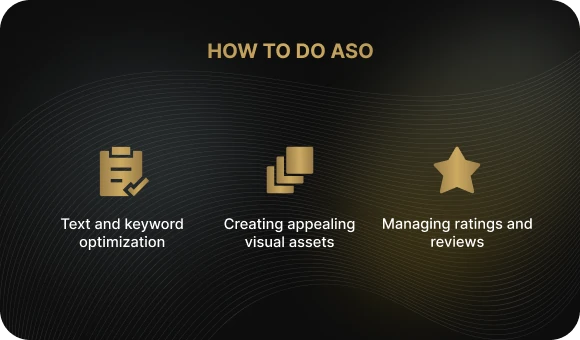
Optimize text and keywords. Work on the title, subtitle, keywords, and description. The title should be concise and memorable, while the description should quickly explain the product’s value. In the App Store, there is a separate field for keywords — it should be filled with meaningful search terms. According to Apple, about 65% of installs happen after users search by keywords, so text optimization directly affects app visibility.
Make the visuals attractive and informative. Your icon, screenshots, and video preview determine whether a user pays attention. On average, a person spends around 7 seconds on an app page and usually looks only at the first two screenshots — that is exactly where your main USP should appear. The icon should be simple and recognizable, while screenshots should show both the interface and the value of the app with short captions. A video preview helps demonstrate functionality and can improve conversion.
Work with ratings and reviews. Ratings and comments influence trust and search ranking. Increasing an app’s rating from 3★ to 4★ can raise conversion by almost 90%. Ask satisfied users to leave a rating, show review prompts at the right moment, and respond to comments. Active engagement with the audience strengthens your reputation and improves visibility in the stores.
Paid Promotion Channels: Where to Advertise Your App
Organic growth is a great place to start, but if you need to bring a product to market quickly, paid tools are essential. They help attract an audience, test hypotheses, and use different ad formats to increase installs and strengthen your position in the app stores. Below are the main methods that genuinely work for mobile app promotion.
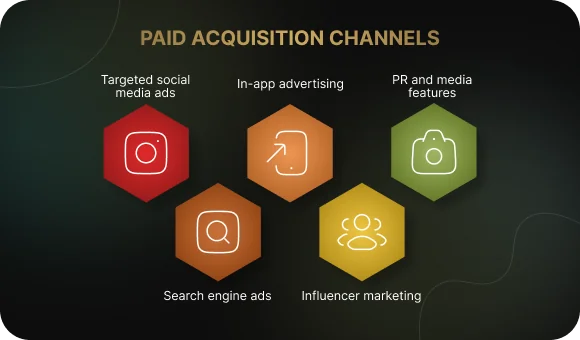
Targeted advertising on social media
Social media is one of the most powerful spaces for app promotion. VKontakte, Telegram Ads, TikTok, and Meta Ads let you tailor promoted posts, banners, and video ads to specific audiences — by interests, location, behavior, and even community subscriptions.
Advantages: precise segmentation, flexible budget settings, retargeting, and fast results.
Disadvantages: high competition and the risk of burning through budget without proper analytics.
Tip: test creatives and audiences, and track installs through analytics platforms.
Search engine advertising
Contextual advertising in Yandex Direct and Google Ads helps attract high-intent users — people who are already looking for a solution to their problem. For example, someone searches for “home workout app” and sees your ad.
Advantages: reaches users who are already looking for a solution. You pay only for clicks.
Disadvantages: high cost per click in competitive niches.
Tip: choose precise keywords and write ads with a clear USP.
In-app advertising
In-app advertising means showing ads inside other mobile apps. You can place banners, videos, or playable ads through platforms such as AdMob, Unity Ads, AppLovin, or myTarget. The user sees the ad, clicks it, and is taken directly to the store page to install the app.
Advantages: direct access to the mobile environment, high conversion, and precise topical targeting.
Disadvantages: high CPI in popular categories.
Tip: use this channel when your app’s unit economics are calculated and can support more expensive traffic.
Influencer and creator marketing
Recommendations from people users trust often work better than any standard advertising campaign. Bloggers and creators talk about apps in videos, posts, or stories, and their audience воспринимает it as personal advice.
Advantages: high engagement and strong word-of-mouth effect.
Disadvantages: results can be hard to predict and measure; advertising with popular influencers can be expensive.
Tip: choose influencers based on audience relevance, not just follower count.
Media coverage and PR
PR remains an important part of a promotion strategy. Reviews, interviews, and press releases in relevant media build trust and create informational momentum around the app.
Advantages: increased brand awareness, high-quality audience, SEO effect.
Disadvantages: results are not immediate, and you need a strong news hook.
Tip: prepare press releases in advance and include facts, quotes, and screenshots so it is easier for media outlets to create coverage.
To make paid campaigns effective, combine different channels. Social media provides reach, search captures high-intent leads, in-app ads add scale, influencers create trust, and PR strengthens reputation. Together, they build a sustainable promotion system and accelerate app growth.
Free Promotion Methods: How to Promote an App Without a Budget
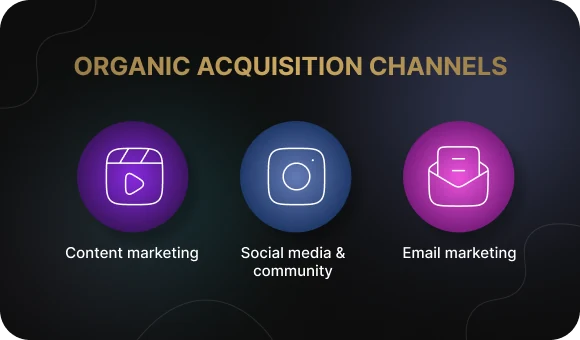
Even if your marketing budget is limited, that is not a reason to stay invisible. App promotion can grow organically — through content, community, and communication with users. Organic methods do not require direct spending, but they build a lasting relationship with the audience and increase trust in the brand. The key is to use these channels in a way that supports audience growth and brand credibility.
Content marketing
Create materials that are useful to users and naturally introduce them to your app: articles, guides, videos, and case studies. People search for answers to their questions — and you provide them through content where the app is woven naturally into the topic.
Advantages: organic traffic, growing trust and expertise, long-term effect — one article can bring users for months.
Disadvantages: requires time and consistency.
Tip: publish useful content related to your product — user stories, tutorial videos, collections of practical tips. This kind of content does not sell directly, but it builds interest and trust.
SMM and community building
Develop your app’s social media pages: share news, updates, tips, run interactive activities and contests. The key is not just to broadcast, but to engage. Users involved in a community become more loyal and are more likely to share your content.
Advantages: direct contact with the audience, increased brand awareness, and word-of-mouth growth.
Disadvantages: requires constant attention and creativity.
Tip: publish living, human content rather than just ads — polls, challenges, and posts involving users themselves. Algorithms favor active communities, and people respond better to a human tone.
Email marketing
Work with the subscriber base collected through your landing page or inside the app. Email helps remind users about your product, announce updates, and bring inactive users back.
Advantages: high engagement and strong ROI — email remains one of the most effective channels, with ROI up to 3600%.
Disadvantages: requires a careful approach — too many emails annoy people, too few lose their effect.
Tip: send emails with real value: usage tips, new feature announcements, greetings, and reminders. Personalize the content — this improves retention.
Organic methods do not deliver instant spikes in installs, but they create the basis for long-term growth. Content attracts, social media engages, and email retains — together, they turn users into a community that helps promote the app on its own.
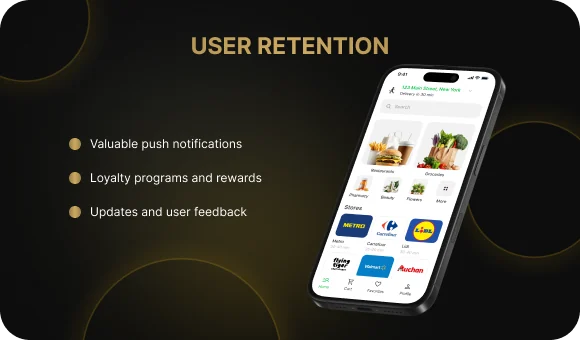
How to Retain Users After Installation: The Work Advertising Cannot Do
When mobile app advertising brings in an install, that is not the end — it is the beginning. A user may open the app once and then forget about it forever. To prevent that, you need a retention system.
Studies show that acquiring a new user can cost up to 25 times more than retaining an existing one. In mobile, the losses are huge: up to 70% of people who install an app delete it in the first months. That is why a well-designed retention strategy does not simply complement marketing — it becomes its core. It maintains interest, brings users back, increases loyalty, and directly affects profit.
Push notifications: remind, do not annoy
Good push notifications bring users back into the app; bad ones encourage them to delete it. Only notifications that provide value work: reminders about a task, an important update, or motivation to take action. The key is not to overload people: more than five notifications per week already causes irritation and increases the risk of deletion.
Example: a food delivery app sends the message: “Your favorite restaurant is open again. Get 15% off your first order today.” The user receives a notification with a clear benefit at the right moment.
Loyalty programs and bonuses: reward activity
Users are more likely to return where there is a sense of value or progress. Loyalty programs, bonuses, and gamification hold attention and build a habit of using the platform. Even a small feeling of achievement motivates people to come back. According to Bain & Company, increasing retention by just 5% can raise profit by up to 95%.
Example: a fitness app awards points for workouts and unlocks new levels when users hit their goals. The user sees their progress, earns badges, and returns so as not to break their streak.
Updates and feedback: show that the app is alive
Regular updates and work with feedback directly influence loyalty. Users stay when they see that the app is evolving and their opinion matters. It is a simple but effective strategy: active improvements retain users longer than any promotion or push campaign.
Example: the team releases an update with a dark mode feature and adds the line in the update notes: “Thanks to everyone who left feedback — we heard you!” Users feel that the developers respond to requests and continue using the app.
Promotion Works as Long as You Keep Working on It
Results appear when all stages work together: target audience and competitor analysis, strong positioning, store page optimization, and thoughtful mobile app advertising. App promotion methods are effective only as part of a broader system: ASO improves visibility, paid channels accelerate growth, and organic channels create a stable flow of installs.
It is just as important to retain the users who have already installed the product. Push notifications, loyalty programs, and regular updates turn one-time installs into a lasting audience. Promotion does not end at acquisition — it is a continuous process of analysis, optimization, and user experience improvement. It is a marathon, where success comes to those who regularly test approaches, monitor metrics, and refine their strategy.
Stop wasting budget on ineffective advertising. We know how to turn marketing spend into real users and revenue. Our goal is not just installs, but attracting an audience that will actively use your app and generate profit. Want to see real growth? Contact us to estimate your app’s potential and launch your first campaign.
How to Build the Foundation for Promotion
Before investing in mobile app promotion, you need to build a solid foundation — understand who the product is for, who you will be competing against, and what makes your app different. Without that groundwork, advertising campaigns turn into shooting in the dark.
1. Understand who you are building the product for
Target audience and competitor analysis is the starting point of promotion. At this stage, it is important to understand who your users are, what goals and habits they have, and what problems the app should solve for them. Create several user personas — generalized profiles that reflect real behavioral scenarios. This will help you speak your audience’s language and use those insights to shape advertising around specific needs.
At the same time, study the market: what apps already exist, which features are in demand, and what frustrates users. According to Adjust, a deep analysis of the audience and competitive landscape helps identify untapped niches, define product positioning more accurately, and reduce mistakes after launch.
Examples of user personas:
Ivan, 32. Works in an office, enjoys sports, and goes to the gym regularly. He wants to track his nutrition so his workouts deliver results. Existing nutrition-tracking apps feel too complex and overloaded for him.
Evgenia, 21. A student constantly busy with classes and part-time work. She needs a time-planning tool, but existing solutions are expensive, inconvenient, and do not help her build a real system.
2. Shape your USP (unique selling proposition)
The next step is to define why a user should choose your app over others. A USP shows the product’s real value and what sets it apart from competitors. This could be a new feature, a more user-friendly interface, better terms, original content, or a distinctive communication style.
For example, if there are already dozens of sleep trackers on the market, your app may stand out not through the number of metrics it offers, but through clear visualization, AI-powered personalized recommendations, a branded mascot, or even short bedtime audio stories. Your unique selling proposition becomes the foundation of all communication — from the app store description to advertising campaigns — and helps create a consistent product image that users remember.
3. Create a landing page
Another important preparation tool is a landing page. Before the app appears in the stores, the website acts as a storefront: it presents the product, explains its value, and helps collect early contacts. On the landing page, you can place a form for release notifications, screenshots, a video preview, and a block with testimonials from test users. All of this helps build a core audience before launch and increases trust in the product.
A landing page also helps attract SEO traffic: while the app itself is not yet indexed in search, the website makes it possible for users to find information about it through relevant search queries. This approach turns the waiting and development stage into a prepared launch base and helps accelerate promotion from day one.
ASO: How to Make the App Store and Google Play Work for You
ASO is the process of improving your app page in the App Store and Google Play so that it looks attractive, instantly communicates the product’s value, and motivates users to install it. This is one of the key ways to promote an app without a budget — simply by designing the store listing correctly.
You work with every element: the title, description, icon, screenshots, video, and reviews — everything should inspire trust and interest. A polished page appears more often in search results, improves the app’s ranking, and increases the number of organic installs.
How to apply ASO in practice
Optimize text and keywords. Work on the title, subtitle, keywords, and description. The title should be concise and memorable, while the description should quickly explain the product’s value. In the App Store, there is a separate field for keywords — it should be filled with meaningful search terms. According to Apple, about 65% of installs happen after users search by keywords, so text optimization directly affects app visibility.
Make the visuals attractive and informative. Your icon, screenshots, and video preview determine whether a user pays attention. On average, a person spends around 7 seconds on an app page and usually looks only at the first two screenshots — that is exactly where your main USP should appear. The icon should be simple and recognizable, while screenshots should show both the interface and the value of the app with short captions. A video preview helps demonstrate functionality and can improve conversion.
Work with ratings and reviews. Ratings and comments influence trust and search ranking. Increasing an app’s rating from 3★ to 4★ can raise conversion by almost 90%. Ask satisfied users to leave a rating, show review prompts at the right moment, and respond to comments. Active engagement with the audience strengthens your reputation and improves visibility in the stores.
Paid Promotion Channels: Where to Advertise Your App
Organic growth is a great place to start, but if you need to bring a product to market quickly, paid tools are essential. They help attract an audience, test hypotheses, and use different ad formats to increase installs and strengthen your position in the app stores. Below are the main methods that genuinely work for mobile app promotion.
Targeted advertising on social media
Social media is one of the most powerful spaces for app promotion. VKontakte, Telegram Ads, TikTok, and Meta Ads let you tailor promoted posts, banners, and video ads to specific audiences — by interests, location, behavior, and even community subscriptions.
Advantages: precise segmentation, flexible budget settings, retargeting, and fast results.
Disadvantages: high competition and the risk of burning through budget without proper analytics.
Tip: test creatives and audiences, and track installs through analytics platforms.
Search engine advertising
Contextual advertising in Yandex Direct and Google Ads helps attract high-intent users — people who are already looking for a solution to their problem. For example, someone searches for “home workout app” and sees your ad.
Advantages: reaches users who are already looking for a solution. You pay only for clicks.
Disadvantages: high cost per click in competitive niches.
Tip: choose precise keywords and write ads with a clear USP.
In-app advertising
In-app advertising means showing ads inside other mobile apps. You can place banners, videos, or playable ads through platforms such as AdMob, Unity Ads, AppLovin, or myTarget. The user sees the ad, clicks it, and is taken directly to the store page to install the app.
Advantages: direct access to the mobile environment, high conversion, and precise topical targeting.
Disadvantages: high CPI in popular categories.
Tip: use this channel when your app’s unit economics are calculated and can support more expensive traffic.
Influencer and creator marketing
Recommendations from people users trust often work better than any standard advertising campaign. Bloggers and creators talk about apps in videos, posts, or stories, and their audience воспринимает it as personal advice.
Advantages: high engagement and strong word-of-mouth effect.
Disadvantages: results can be hard to predict and measure; advertising with popular influencers can be expensive.
Tip: choose influencers based on audience relevance, not just follower count.
Media coverage and PR
PR remains an important part of a promotion strategy. Reviews, interviews, and press releases in relevant media build trust and create informational momentum around the app.
Advantages: increased brand awareness, high-quality audience, SEO effect.
Disadvantages: results are not immediate, and you need a strong news hook.
Tip: prepare press releases in advance and include facts, quotes, and screenshots so it is easier for media outlets to create coverage.
To make paid campaigns effective, combine different channels. Social media provides reach, search captures high-intent leads, in-app ads add scale, influencers create trust, and PR strengthens reputation. Together, they build a sustainable promotion system and accelerate app growth.
Free Promotion Methods: How to Promote an App Without a Budget
Even if your marketing budget is limited, that is not a reason to stay invisible. App promotion can grow organically — through content, community, and communication with users. Organic methods do not require direct spending, but they build a lasting relationship with the audience and increase trust in the brand. The key is to use these channels in a way that supports audience growth and brand credibility.
Content marketing
Create materials that are useful to users and naturally introduce them to your app: articles, guides, videos, and case studies. People search for answers to their questions — and you provide them through content where the app is woven naturally into the topic.
Advantages: organic traffic, growing trust and expertise, long-term effect — one article can bring users for months.
Disadvantages: requires time and consistency.
Tip: publish useful content related to your product — user stories, tutorial videos, collections of practical tips. This kind of content does not sell directly, but it builds interest and trust.
SMM and community building
Develop your app’s social media pages: share news, updates, tips, run interactive activities and contests. The key is not just to broadcast, but to engage. Users involved in a community become more loyal and are more likely to share your content.
Advantages: direct contact with the audience, increased brand awareness, and word-of-mouth growth.
Disadvantages: requires constant attention and creativity.
Tip: publish living, human content rather than just ads — polls, challenges, and posts involving users themselves. Algorithms favor active communities, and people respond better to a human tone.
Email marketing
Work with the subscriber base collected through your landing page or inside the app. Email helps remind users about your product, announce updates, and bring inactive users back.
Advantages: high engagement and strong ROI — email remains one of the most effective channels, with ROI up to 3600%.
Disadvantages: requires a careful approach — too many emails annoy people, too few lose their effect.
Tip: send emails with real value: usage tips, new feature announcements, greetings, and reminders. Personalize the content — this improves retention.
Organic methods do not deliver instant spikes in installs, but they create the basis for long-term growth. Content attracts, social media engages, and email retains — together, they turn users into a community that helps promote the app on its own.
How to Retain Users After Installation: The Work Advertising Cannot Do
When mobile app advertising brings in an install, that is not the end — it is the beginning. A user may open the app once and then forget about it forever. To prevent that, you need a retention system.
Studies show that acquiring a new user can cost up to 25 times more than retaining an existing one. In mobile, the losses are huge: up to 70% of people who install an app delete it in the first months. That is why a well-designed retention strategy does not simply complement marketing — it becomes its core. It maintains interest, brings users back, increases loyalty, and directly affects profit.
Push notifications: remind, do not annoy
Good push notifications bring users back into the app; bad ones encourage them to delete it. Only notifications that provide value work: reminders about a task, an important update, or motivation to take action. The key is not to overload people: more than five notifications per week already causes irritation and increases the risk of deletion.
Example: a food delivery app sends the message: “Your favorite restaurant is open again. Get 15% off your first order today.” The user receives a notification with a clear benefit at the right moment.
Loyalty programs and bonuses: reward activity
Users are more likely to return where there is a sense of value or progress. Loyalty programs, bonuses, and gamification hold attention and build a habit of using the platform. Even a small feeling of achievement motivates people to come back. According to Bain & Company, increasing retention by just 5% can raise profit by up to 95%.
Example: a fitness app awards points for workouts and unlocks new levels when users hit their goals. The user sees their progress, earns badges, and returns so as not to break their streak.
Updates and feedback: show that the app is alive
Regular updates and work with feedback directly influence loyalty. Users stay when they see that the app is evolving and their opinion matters. It is a simple but effective strategy: active improvements retain users longer than any promotion or push campaign.
Example: the team releases an update with a dark mode feature and adds the line in the update notes: “Thanks to everyone who left feedback — we heard you!” Users feel that the developers respond to requests and continue using the app.
Promotion Works as Long as You Keep Working on It
Results appear when all stages work together: target audience and competitor analysis, strong positioning, store page optimization, and thoughtful mobile app advertising. App promotion methods are effective only as part of a broader system: ASO improves visibility, paid channels accelerate growth, and organic channels create a stable flow of installs.
It is just as important to retain the users who have already installed the product. Push notifications, loyalty programs, and regular updates turn one-time installs into a lasting audience. Promotion does not end at acquisition — it is a continuous process of analysis, optimization, and user experience improvement. It is a marathon, where success comes to those who regularly test approaches, monitor metrics, and refine their strategy.
Stop wasting budget on ineffective advertising. We know how to turn marketing spend into real users and revenue. Our goal is not just installs, but attracting an audience that will actively use your app and generate profit. Want to see real growth? Contact us to estimate your app’s potential and launch your first campaign.