04.06.2026
Time to read:
5
min
How to Build Your Own Online Cinema Platform
Development
Guides
The online streaming market is breaking records: in 2025, millions of people consume digital content, and demand is only growing. That makes it a great time to launch an online cinema platform and enter a promising market.
According to forecasts, by 2029 the number of streaming service users will reach 2 billion, while industry revenue will grow to $190 billion.
Your own streaming service can offer many advantages: you can monetize through subscriptions, advertising, or one-time payments; you will not depend on third-party platforms and their rules; and you will have full freedom in choosing and managing content, allowing you to create a unique offering for your audience.
If you’ve been thinking about how to build an online cinema platform, now is the perfect time to bring that idea to life.
Market Research and Choosing a Concept
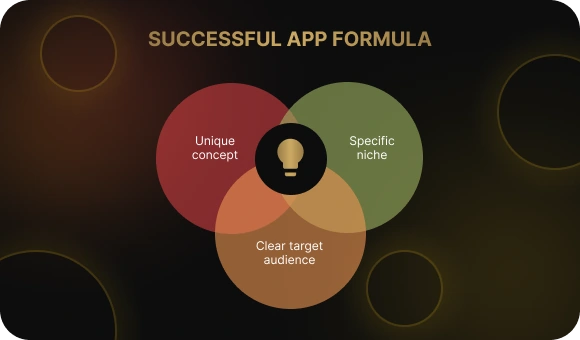
Before launching, you need to conduct market research and define your platform’s concept. Viewers are increasingly choosing niche services that offer specialized content.
For example, Shudder, a platform focused on horror fans, has successfully attracted more than a million subscribers by offering a carefully curated selection of films and series within its genre. This trend highlights the importance of personalization and appealing to specific audience interests.
Competitor analysis
Major market players such as Netflix, Amazon Prime Video, ivi, Okko, and Start continue to dominate by investing heavily in original content and expanding their libraries.
For example, Netflix and Amazon have invested more than $38 billion in exclusive projects such as Stranger Thingsand The Lord of the Rings. Studying their strategies can help you understand which approaches work in the market and how you can stand out from competitors.
Choosing a niche
Defining a unique niche can become the key to your online cinema platform’s success. Here are a few possible directions:
- Licensed movies and TV series — access to popular and classic titles.
- Independent films and exclusive releases — original projects available only on your platform.
- An online cinema for a specific audience — for example, children’s content, sports broadcasts, or educational materials.
- Highly specialized genres — focusing on anime, documentaries, or classic cinema.
Choose your niche only after analyzing the needs and preferences of your target audience.
Defining the target audience
Understanding the demographics, interests, and habits of potential users will help you tailor both your content and your marketing strategy. For example, if your audience is young parents, then a focus on cartoons and parental control features could become a major advantage.
Licensing and Legal Compliance
If you want to build your own online cinema platform, remember one thing first: legality is where everything begins. Without official rights to the content, no service can operate safely or sustainably for long.
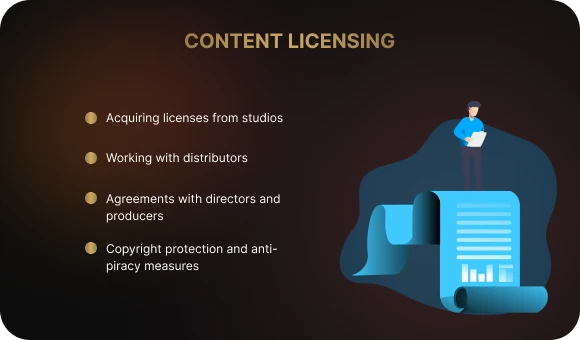
You need to think in advance about where and how you will obtain licenses. Here are several common options:
- Purchasing licenses directly from studios.
Contact film companies directly to acquire screening rights for their content. This may include both new releases and classic films.
- Working with distributors.
Distributors provide access to large libraries from different studios, which makes the licensing process simpler.
- Partnering with independent directors and producers.
By working with creators of independent films, you can offer viewers unique content while also supporting creative professionals.
- Copyright protection and anti-piracy measures.
Respecting copyright is a critical part of operating an online cinema platform. You can use DRM (Digital Rights Management) technologies to protect films and series from unauthorized copying and distribution. Cooperation with intellectual property protection organizations can also help you respond quickly to piracy cases and maintain the service’s legal integrity.
Monetizing an Online Cinema Platform
If you decide to create your own online cinema platform, you should think in advance about how it will generate revenue. Monetization is what turns a project into a sustainable business.
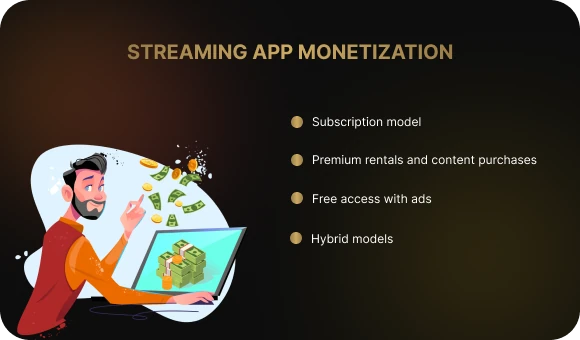
There are several proven revenue models, and each one may fit depending on your audience and concept:
- Subscription model (SVOD — Subscription Video On Demand).
Viewers pay a recurring subscription fee for unlimited access to content. Examples include Netflix and Disney+. This model provides stable revenue and helps retain the audience.
- Paid rental and purchase (TVOD — Transactional Video On Demand).
Users pay to watch specific movies or series without a subscription commitment. Examples include Apple iTunesand Amazon Prime Rentals. This model works well for monetizing premium or newly released content.
- Free access with advertising (AVOD — Advertising Video On Demand).
Films and series are available for free, but with ads shown during playback. Examples include YouTube and Peacock. AVOD attracts a broader audience, especially users who are not ready to pay for a subscription.
- Hybrid models.
A combination of several approaches, such as free content with ads and a premium ad-free subscription. This strategy helps you reach different audience segments and diversify your revenue streams.
- Affiliate programs and branded collaborations.
Partnering with other companies to promote content or create exclusive offers can increase brand awareness and attract new viewers.
Technical Aspects of Platform Development
Understanding how to build your own online cinema platform means understanding the technology behind it. A successful platform starts with the right architecture: from choosing a ready-made solution or fully custom development to cloud storage, CDN infrastructure, and interface design. All of this affects speed, reliability, and viewer comfort.
Choosing a development model
Ready-made solutions (white-label platforms, SaaS services).
Existing platforms allow you to launch quickly with minimal investment. These solutions provide core functionality that can be adapted to your brand. However, customization and flexibility may be limited.
Custom development from scratch.
Building a unique platform from the ground up gives you full freedom in choosing functionality and design. Keep in mind that this approach requires greater investment and more time, but the result is a product fully aligned with your requirements and audience expectations.
Choosing the technology stack
Web platform and mobile apps.
Giving users access through both a website and mobile applications expands your reach. Cross-platform development using technologies such as React Native or Flutter can reduce costs and accelerate development.
Cloud servers for content storage and streaming.
Cloud solutions provide scalability and flexibility. With cloud servers, you can manage traffic efficiently and maintain stable platform performance.
CDN integration for high-speed delivery.
A Content Delivery Network (CDN) distributes content across servers in different regions, helping reduce latency and improve video loading speed.

UI/UX design
Movie catalog.
An intuitive catalog structure and navigation help viewers easily find films. Categorization by genre, rating, and other filters improves the overall user experience.
Recommendations.
Implementing algorithms that analyze user preferences helps deliver personalized recommendations, increasing engagement and viewer satisfaction.
Subscriptions and payments.
A transparent subscription flow improves conversion, while payment system integrations and multiple payment options increase user loyalty.
MVP Development and Testing
Launching an MVP helps you quickly test the platform with real users.
Start with a basic set of features to collect feedback and understand which elements need improvement. After gathering feedback, optimize the product, fix bugs, and refine the user experience. This allows you to adapt the service to audience needs and avoid unnecessary expenses.
Marketing and Audience Acquisition
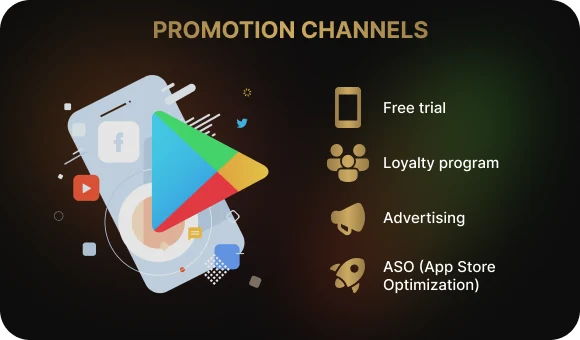
To attract viewers to your platform, it is worth starting with SEO optimization so users can find you through search engines. Free trial subscriptions and loyalty programs can be highly effective for retention. Social media activity and partnerships with bloggers or influencers can also help expand your audience.
It is equally important to collect feedback and analyze how users interact with the platform — this will help you improve the service and make it even more convenient for viewers.
Conclusion
Now you know how to build an online cinema platform, and overall the process is not as complicated as it may seem when approached step by step. With Beetrail, you do not need to dive into every technical detail — we can handle the development of a high-quality, user-friendly product that solves real audience needs.
Our team provides a full-cycle development process, so your project is ready for launch.
Fill out a request, and we can start working on your app today.
Market Research and Choosing a Concept
Before launching, you need to conduct market research and define your platform’s concept. Viewers are increasingly choosing niche services that offer specialized content.
For example, Shudder, a platform focused on horror fans, has successfully attracted more than a million subscribers by offering a carefully curated selection of films and series within its genre. This trend highlights the importance of personalization and appealing to specific audience interests.
Competitor analysis
Major market players such as Netflix, Amazon Prime Video, ivi, Okko, and Start continue to dominate by investing heavily in original content and expanding their libraries.
For example, Netflix and Amazon have invested more than $38 billion in exclusive projects such as Stranger Thingsand The Lord of the Rings. Studying their strategies can help you understand which approaches work in the market and how you can stand out from competitors.
Choosing a niche
Defining a unique niche can become the key to your online cinema platform’s success. Here are a few possible directions:
- Licensed movies and TV series — access to popular and classic titles.
- Independent films and exclusive releases — original projects available only on your platform.
- An online cinema for a specific audience — for example, children’s content, sports broadcasts, or educational materials.
- Highly specialized genres — focusing on anime, documentaries, or classic cinema.
Choose your niche only after analyzing the needs and preferences of your target audience.
Defining the target audience
Understanding the demographics, interests, and habits of potential users will help you tailor both your content and your marketing strategy. For example, if your audience is young parents, then a focus on cartoons and parental control features could become a major advantage.
Licensing and Legal Compliance
If you want to build your own online cinema platform, remember one thing first: legality is where everything begins. Without official rights to the content, no service can operate safely or sustainably for long.
You need to think in advance about where and how you will obtain licenses. Here are several common options:
- Purchasing licenses directly from studios.
Contact film companies directly to acquire screening rights for their content. This may include both new releases and classic films.
- Working with distributors.
Distributors provide access to large libraries from different studios, which makes the licensing process simpler.
- Partnering with independent directors and producers.
By working with creators of independent films, you can offer viewers unique content while also supporting creative professionals.
- Copyright protection and anti-piracy measures.
Respecting copyright is a critical part of operating an online cinema platform. You can use DRM (Digital Rights Management) technologies to protect films and series from unauthorized copying and distribution. Cooperation with intellectual property protection organizations can also help you respond quickly to piracy cases and maintain the service’s legal integrity.
Monetizing an Online Cinema Platform
If you decide to create your own online cinema platform, you should think in advance about how it will generate revenue. Monetization is what turns a project into a sustainable business.
There are several proven revenue models, and each one may fit depending on your audience and concept:
- Subscription model (SVOD — Subscription Video On Demand).
Viewers pay a recurring subscription fee for unlimited access to content. Examples include Netflix and Disney+. This model provides stable revenue and helps retain the audience.
- Paid rental and purchase (TVOD — Transactional Video On Demand).
Users pay to watch specific movies or series without a subscription commitment. Examples include Apple iTunesand Amazon Prime Rentals. This model works well for monetizing premium or newly released content.
- Free access with advertising (AVOD — Advertising Video On Demand).
Films and series are available for free, but with ads shown during playback. Examples include YouTube and Peacock. AVOD attracts a broader audience, especially users who are not ready to pay for a subscription.
- Hybrid models.
A combination of several approaches, such as free content with ads and a premium ad-free subscription. This strategy helps you reach different audience segments and diversify your revenue streams.
- Affiliate programs and branded collaborations.
Partnering with other companies to promote content or create exclusive offers can increase brand awareness and attract new viewers.
Technical Aspects of Platform Development
Understanding how to build your own online cinema platform means understanding the technology behind it. A successful platform starts with the right architecture: from choosing a ready-made solution or fully custom development to cloud storage, CDN infrastructure, and interface design. All of this affects speed, reliability, and viewer comfort.
Choosing a development model
Ready-made solutions (white-label platforms, SaaS services).
Existing platforms allow you to launch quickly with minimal investment. These solutions provide core functionality that can be adapted to your brand. However, customization and flexibility may be limited.
Custom development from scratch.
Building a unique platform from the ground up gives you full freedom in choosing functionality and design. Keep in mind that this approach requires greater investment and more time, but the result is a product fully aligned with your requirements and audience expectations.
Choosing the technology stack
Web platform and mobile apps.
Giving users access through both a website and mobile applications expands your reach. Cross-platform development using technologies such as React Native or Flutter can reduce costs and accelerate development.
Cloud servers for content storage and streaming.
Cloud solutions provide scalability and flexibility. With cloud servers, you can manage traffic efficiently and maintain stable platform performance.
CDN integration for high-speed delivery.
A Content Delivery Network (CDN) distributes content across servers in different regions, helping reduce latency and improve video loading speed.
UI/UX design
Movie catalog.
An intuitive catalog structure and navigation help viewers easily find films. Categorization by genre, rating, and other filters improves the overall user experience.
Recommendations.
Implementing algorithms that analyze user preferences helps deliver personalized recommendations, increasing engagement and viewer satisfaction.
Subscriptions and payments.
A transparent subscription flow improves conversion, while payment system integrations and multiple payment options increase user loyalty.
MVP Development and Testing
Launching an MVP helps you quickly test the platform with real users.
Start with a basic set of features to collect feedback and understand which elements need improvement. After gathering feedback, optimize the product, fix bugs, and refine the user experience. This allows you to adapt the service to audience needs and avoid unnecessary expenses.
Marketing and Audience Acquisition
To attract viewers to your platform, it is worth starting with SEO optimization so users can find you through search engines. Free trial subscriptions and loyalty programs can be highly effective for retention. Social media activity and partnerships with bloggers or influencers can also help expand your audience.
It is equally important to collect feedback and analyze how users interact with the platform — this will help you improve the service and make it even more convenient for viewers.
Conclusion
Now you know how to build an online cinema platform, and overall the process is not as complicated as it may seem when approached step by step. With Beetrail, you do not need to dive into every technical detail — we can handle the development of a high-quality, user-friendly product that solves real audience needs.
Our team provides a full-cycle development process, so your project is ready for launch.
Fill out a request, and we can start working on your app today.