04.06.2026
Time to read:
9
min
Guide: How to Build a Food Delivery App
Guides
Development
Developing a food delivery app is becoming a necessity in an era when online services are in ever-growing demand.
According to T-Bank Data, from January 2020 to April 2023, the number of customers using grocery delivery services increased 13-fold. Online grocery turnover doubled, while the share of restaurant delivery orders grew by 60%. This is driven by convenience, time savings, and a wider choice of options.
Thinking about how to build a food delivery app?
Then keep in mind that competition in this market is intense. To succeed, you need to consider many factors. Food delivery app development requires a strong focus on user needs, an intuitive interface, and fast delivery. In this article, we’ll share practical tips on how to make your service appealing and in demand among a broad audience.
Why You Should Build a Food Delivery App
Food delivery apps have long become part of everyday life. We have all faced situations where we want something tasty to eat but do not have the time or desire to leave home. That is exactly where these apps come in.
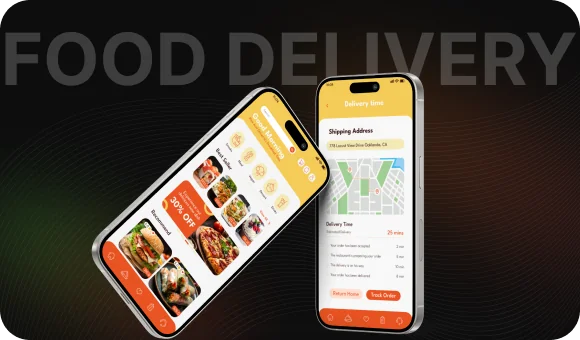
Convenience and accessibility.
If you want to build a food delivery app, then your key advantage will be convenience and accessibility.
Speed and simplicity.
Another major benefit is speed. Forget long phone calls with operators or waiting in line. With an app, placing an order takes just a few minutes.
Comfort and time savings.
Comfort is another big advantage of food delivery apps. There is no need to drive to a restaurant, look for parking, and wait for your meal to be prepared.
Variety of food choices.
One of the key reasons food delivery apps are so popular is the wide range of options. In a single app, users can find restaurants offering all kinds of cuisines — from Italian to Japanese.
Convenient payment methods.
Along with all the other benefits, these apps often offer multiple payment options. Users can pay by card, in cash upon delivery, or through digital wallets such as Apple Pay.
Why This Matters for Business
For businesses, food delivery apps are not just a way to increase sales — they are also a tool for improving customer relationships. For example, it is much easier to make personalized offers and collect feedback through an app. This helps businesses adapt to customer needs and provide better service.
According to statistics, people who use apps order food more often and remain more loyal.
Apps make purchasing easier, and customers keep coming back because they enjoy the process itself — everything is simple, fast, and effortless.
Let’s look at some examples of profit growth in the food delivery industry
In food delivery, it is important to build strategies that encourage customers to use the service again and again. One successful market example is Yandex.Eats. The company introduced a loyalty system that significantly increased profits and strengthened its leadership position.
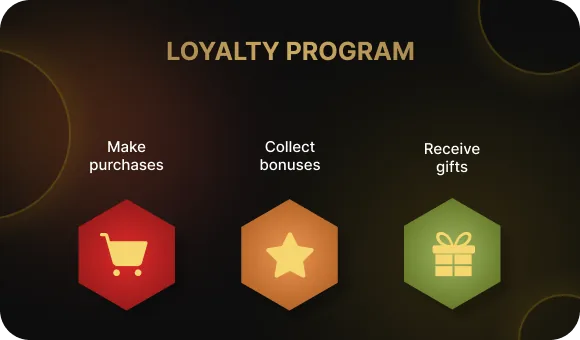
The system is built around three main elements:
Purchase bonuses.
For every order, the customer receives bonus points that can be used to pay for future purchases or exchanged for discounts. For example, spend 1,000 rubles and get 100 bonus points in your account. All начисления are displayed in the personal account.
Referral program.
Invite friends and earn bonuses. The program rewards users for bringing in new customers. If a new user signs up through your link and places their first order, you receive a bonus reward.
Personalized offers.
The program takes customer preferences into account. Love pizza? Then you get special discounts on your favorite meals. Algorithms analyze order history to offer exactly what the user wants.
This kind of loyalty system helps a company retain customers, increase purchase frequency, and attract new users through referrals. Personalization shows care for each user, builds trust, and strengthens long-term relationships. The result? Higher average order value and increased overall profit.
Other Successful Examples of Profit Growth
Samokat.
The Samokat app became a real hit because it fit perfectly into the rhythm of modern life.
Its main advantage is ultra-fast delivery: from placing the order to receiving it at the door takes just 15–30 minutes.
In a world where every minute counts, that is a huge advantage. But speed is only part of the formula. The service offers an impressive assortment of more than 5,000 products, from fresh groceries to household essentials. Add convenient payment options — cash, cards, digital wallets — plus constant promotions and bonuses, and the result is a shopping experience that is convenient, cost-effective, and enjoyable.
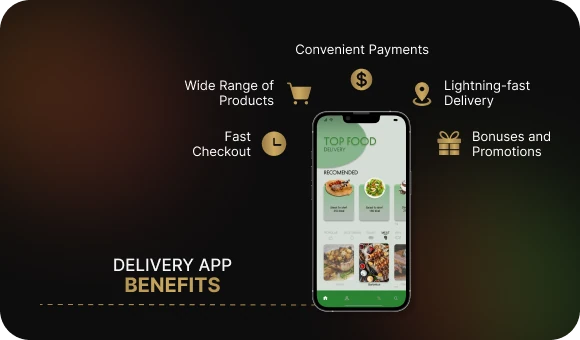
VkusVill.
The mobile app helped VkusVill become a leader in e-grocery.
If in 2018 grocery delivery was only an experiment carried out through third-party services, then by 2020 VkusVill had confidently taken the lead in the Russian e-grocery market, increasing the share of online sales from 1% to 25%.
The secret was that the app turned into a real Swiss army knife for customers: delivery, pickup, online returns, and even gamified achievements. Most importantly, during the 2020 pandemic, VkusVill quickly restructured its internal processes. Now an order placed through the app is instantly processed by a “smart” checkout system, and products are picked and delivered as fast as possible.
The result? The company’s own delivery service generated nearly 15 billion rubles in revenue in 2020, and the app itself was recognized as the most functional among Russian retailers.
How Can You Make Money with a Food Delivery App?
Statistics show that the food delivery market is worth billions of dollars. Impressive, right? But how exactly does it work? How can an app generate stable revenue? Let’s break it down.

Commission from restaurants
Restaurants pay for every delivery completed through the app. For example, you order a burger through a delivery app, and the restaurant pays a percentage of the order value. Everyone benefits: the restaurant gets more customers, the app gets its commission, and the user enjoys a hot burger. It is a classic model: you create value for all parties, and get paid for it.
Delivery fee
Users pay not only the courier, but also the app that organized the process. For example, you decide to treat yourself to sushi, open the app, and place an order — and the app adds a small fee to the total amount. Convenient? Absolutely. The delivery works, the app earns money, and the sushi is on its way.
Paid promotion
Every restaurant wants to be more visible. Apps can offer restaurants the opportunity to appear at the top of the list or promote special offers. It works like advertising that restaurants pay for. Meanwhile, customers choose venues from the top positions and enjoy the discounts.
Customer subscriptions
A paid subscription is a goldmine for people who order often. For a fixed fee, users can get free delivery or exclusive discounts. For people who order food several times a week, this is a great way to save money. For the app, it creates stable recurring revenue.
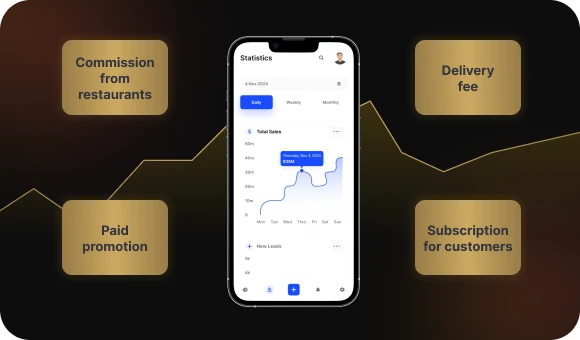
All these monetization models can work individually or together, creating a stable ecosystem where everyone benefits: restaurants get customers, users get convenience, and the app makes money.
Essential Features for Customers
Modern food delivery apps are more than just a way to order lunch. They are convenient tools that connect customers, couriers, and restaurants into one ecosystem. Let’s look at which features your app should include to keep every user satisfied.
For customers
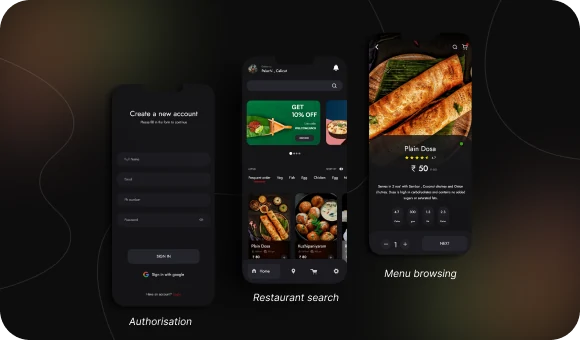
Registration
A convenient login is key to success. Why does it matter? The first step a user takes in the app is authorization. In delivery services, this process should be as simple and fast as possible. Usually, it is enough to enter a phone number or log in through a popular social platform.
Restaurant and dish search with filters
The app’s home screen usually shows only featured restaurants. But that is just the tip of the iceberg. To help users discover the full variety of places, find a specific dish, or browse cuisines, it is important to implement convenient search. Without it, the app loses part of its appeal and usability.
Viewing menus and customizing orders
To encourage users to place orders, let them browse menus, read dish descriptions, and make small customizations. For example, they might choose extra toppings or replace regular cutlery with chopsticks when ordering sushi.
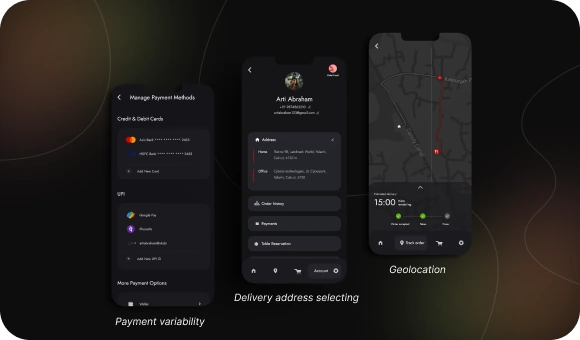
Flexible payment options
Card payments are a core feature of any delivery app. To enable them, you need to connect payment gateways. They generally fall into two categories:
- Traditional gateways. Suitable for large companies and require opening a merchant account with a bank.
- Modern gateways. Work with a standard bank account but usually charge higher fees.
Delivery time and address selection
Give users the ability to choose a convenient delivery time and save addresses. Imagine how great it is to order pizza on your way home and have it arrive just as you step through the door.
Geolocation
To automatically determine a user’s location, you can integrate with Google Maps or Yandex Maps.
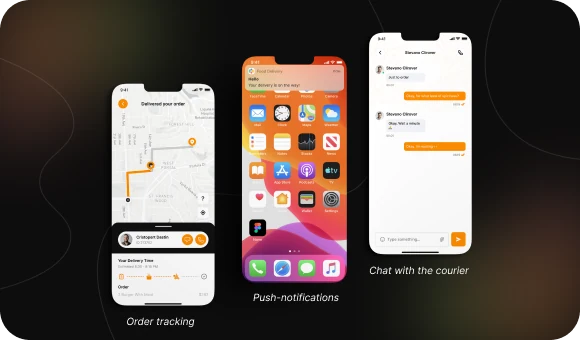
Real-time order tracking
Let users track their order in real time. This gives them confidence that everything is under control and makes the delivery process transparent. To make waiting more engaging, you can even add a fun little distraction or mini-feature so users do not just keep refreshing the screen.
Push notifications
To keep users updated on every stage of the delivery process, implement push notifications. They can also be used for personalized promotions and special offers.
Courier chat
A chat with the courier allows users to quickly find out why a delivery is delayed or let the courier know they will pick the order up downstairs. This helps avoid misunderstandings and reduces frustrated support requests.
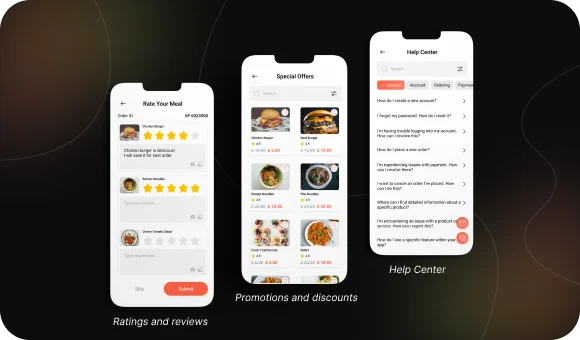
Ratings and reviews
Reviews benefit everyone: restaurants get feedback, users can make better choices, and people who leave reviews feel that their opinion really matters — especially when it is truly taken into account.
Promotions and discounts
Share attractive offers with users to keep them interested and encourage more frequent orders. They will keep checking the app to see whether new deals have appeared. Bright, appealing food photos on the home screen can also help hold attention, even if there are no discounts at the moment.
Customer support
To help users in difficult or disputed situations, offer multiple support options. Chatbots are great for simple questions, while more complex issues can always be escalated to a live operator.
Essential Features for Restaurants and Couriers
For restaurants
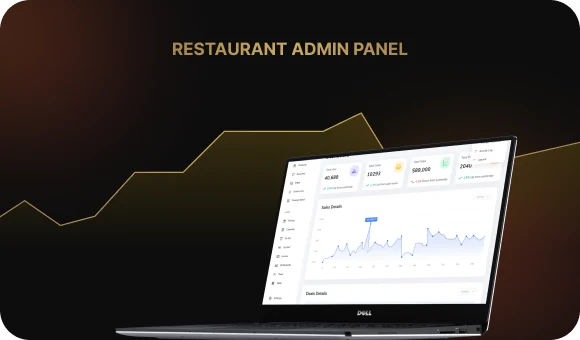
Management dashboard
The dashboard is where restaurant staff can quickly see all incoming orders and start processing them. It should be as simple and convenient as possible, so restaurants can easily track orders, manage delivery, and communicate with customers.
Menu editing
This is needed so customers do not order dishes that cannot currently be prepared due to missing ingredients, and so restaurants can add new items when needed. It should also allow them to update dish photos and descriptions.
Order management
Everything should run smoothly. Restaurants can view orders, accept them, or reject them if the kitchen is overloaded.
Notifications
Notifications help restaurants receive updates in real time. They can immediately see new orders and process them quickly. If an order changes after it has been placed, restaurants can also respond right away.
Inventory and stock management
Give restaurants the ability to update product availability in the app. This way they do not accept orders for unavailable items and can always deliver only fresh, available dishes.
Delivery zone and settings
Restaurants should be able to decide how far they are willing to deliver. This helps them ensure timely delivery and avoid issues with couriers.
Order analytics and reports
Restaurants can track the number of orders, the most popular dishes, and peak demand periods. This helps them make informed decisions and improve service quality.
Customer interaction
Direct communication with customers is an important part of restaurant operations. It allows restaurants to receive reviews and ratings, reply to comments, and show that they value their guests’ opinions.
Special offers for customers
Give restaurants the ability to create and manage promotions and discounts. This helps them attract new customers and makes your app even more appealing.
For couriers
Registration
This is necessary so the system knows who is delivering orders. Usually, a phone number is enough to sign in.
Order list
Here, couriers can see all available orders, along with the restaurant name, distance, and delivery time. This helps them choose the order that is most convenient and accept it right away.
Delivery status updates
The status is updated every time the courier performs an action — accepts the order, waits for the food to be prepared, drives to the customer, or hands over the package. All these changes are instantly reflected in the app, so the customer always knows what stage the order is at.
Order history
This helps couriers easily track the number of completed deliveries.
In the end, you get a complete set of solutions for all participants in the process. A properly implemented feature set makes the app convenient and in demand. Customers get tasty food on time, restaurants increase their profit, and couriers work comfortably.
All this can be implemented through two applications — one for customers and couriers, and one for administrators. Each is designed for maximum simplicity and ease of use, ensuring effective interaction between all parties.
Stages of Creating a Successful Food Delivery App
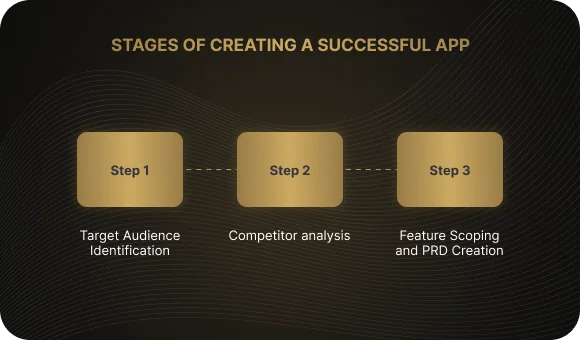
Now let’s move on to the guide. Below are the steps you can follow to build a food delivery app. These are important stages that will help you consider all the details and create a product that is convenient and functional for users.
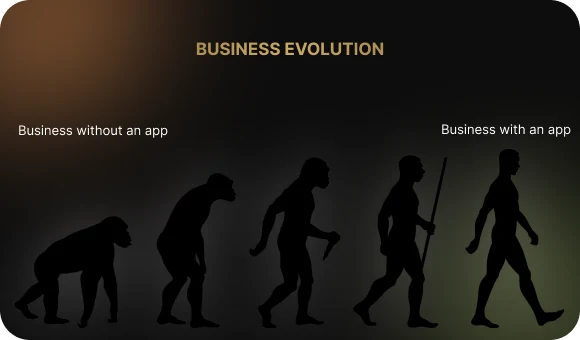
Step 1. Define your target audience
Ask yourself: who exactly are you building the app for? How old are they? What are their interests, lifestyle, and food preferences?
For example, millennials aged 25–35 are active technology users who often order food delivery. Think about how to make the app as useful as possible for this group — maybe with convenient menu filters, personalized recommendations, or offers for vegetarians, foodies, or health-conscious users.
Step 2. Analyze competitors
Before development begins, study the apps already on the market. What do the major players offer? What are their strengths and weaknesses?
For example, one app may deliver quickly but have an inconvenient interface, while another may offer great discounts but a limited food selection. By analyzing competitors, you can understand what can be improved and how your product can stand out.
Step 3. Define the feature set and prepare the technical specification
Once you understand your target audience and competitors, it is time to move into the details. Think about which features the app should include.
This could be dish search and filters, payment through mobile wallets, a loyalty system, or real-time order tracking. You may even need several apps: one for customers, another for couriers, and a third for administrators.
After that, prepare a technical specification describing the project goals, functional requirements, interface features, and user scenarios. This is an important document that guides the entire team and helps everyone clearly understand what needs to be built.
Step 4. UX/UI design
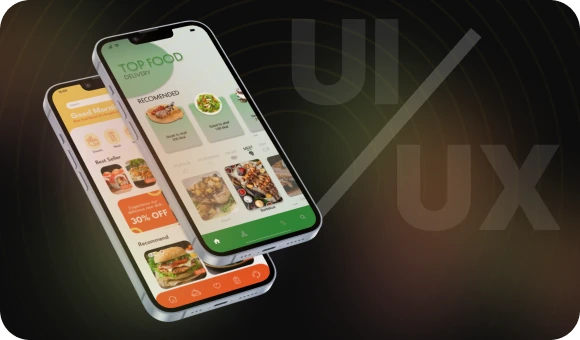
Design plays a crucial role in digital products, especially in food delivery. The visual side of the app is the first thing the user sees, and it shapes the overall perception of the service. It is important not only to create an attractive interface, but also to think through its functionality.
At the first stage, you choose the colors, fonts, and visual style. For example, if you use a dark background, the text should be highly contrasting for comfortable reading. Navigation is also important: the app must be intuitive.
Good navigation is like a route in an unfamiliar city — everything you need should be easy to find. In a restaurant app, special attention should be paid to the menu and dish search, so users can quickly find what they need. The simpler and faster the search, the higher the user loyalty.
Step 5. Feature development
At this stage, it is important to clearly define what users will actually do in the app. For example, will they be able to search for restaurants using filters, browse menus with prices, order food, and pay directly in the app? Or maybe track delivery status?
All of these functions need to be carefully planned so the app feels convenient and clear. Security is also essential: protecting personal data is a must.
Step 6. Testing
And here comes the moment when the product is almost ready for launch. Developers finish writing the code, connect the required third-party services, and then testing begins.
The most important thing at this stage is to check the app for errors and bugs. If any are found, they must be fixed. Only after that can the app be safely launched in the store.
Step 7. Store release and promotion
After the final tests, the app is published on the platforms. Launch your delivery app and actively promote it through different channels. Do not forget about social media marketing and referral programs to increase the number of users.
Step 8. App growth and support
But that is not all. Once all stages of development are successfully completed, the app is ready for release. But that is only the beginning.
Development never stands still, and it is important to continue supporting and updating the app so it keeps meeting users’ changing needs. Regular updates and close attention to feedback help improve the product and maintain customer loyalty.

Conclusion
The question of how to build a food delivery app is becoming more and more relevant in the world of fast service. Food delivery app development is not just about building features — it is a comprehensive process that includes planning, testing, and implementing a convenient interface.
Building a high-quality product requires a professional approach, and Beetrail is ready to become your reliable partner at every stage. We create solutions that help businesses grow while adapting to changing market demands and audience expectations.
Beetrail knows how to turn your idea into a successful app. We provide end-to-end development: from concept to publication and support.
Take a look at our projects and leave a request in the form below. We will be happy to discuss your goals and help estimate the cost.
Why You Should Build a Food Delivery App
Food delivery apps have long become part of everyday life. We have all faced situations where we want something tasty to eat but do not have the time or desire to leave home. That is exactly where these apps come in.
Convenience and accessibility.
If you want to build a food delivery app, then your key advantage will be convenience and accessibility.
Speed and simplicity.
Another major benefit is speed. Forget long phone calls with operators or waiting in line. With an app, placing an order takes just a few minutes.
Comfort and time savings.
Comfort is another big advantage of food delivery apps. There is no need to drive to a restaurant, look for parking, and wait for your meal to be prepared.
Variety of food choices.
One of the key reasons food delivery apps are so popular is the wide range of options. In a single app, users can find restaurants offering all kinds of cuisines — from Italian to Japanese.
Convenient payment methods.
Along with all the other benefits, these apps often offer multiple payment options. Users can pay by card, in cash upon delivery, or through digital wallets such as Apple Pay.
Why This Matters for Business
For businesses, food delivery apps are not just a way to increase sales — they are also a tool for improving customer relationships. For example, it is much easier to make personalized offers and collect feedback through an app. This helps businesses adapt to customer needs and provide better service.
According to statistics, people who use apps order food more often and remain more loyal.
Apps make purchasing easier, and customers keep coming back because they enjoy the process itself — everything is simple, fast, and effortless.
Let’s look at some examples of profit growth in the food delivery industry
In food delivery, it is important to build strategies that encourage customers to use the service again and again. One successful market example is Yandex.Eats. The company introduced a loyalty system that significantly increased profits and strengthened its leadership position.
The system is built around three main elements:
Purchase bonuses.
For every order, the customer receives bonus points that can be used to pay for future purchases or exchanged for discounts. For example, spend 1,000 rubles and get 100 bonus points in your account. All начисления are displayed in the personal account.
Referral program.
Invite friends and earn bonuses. The program rewards users for bringing in new customers. If a new user signs up through your link and places their first order, you receive a bonus reward.
Personalized offers.
The program takes customer preferences into account. Love pizza? Then you get special discounts on your favorite meals. Algorithms analyze order history to offer exactly what the user wants.
This kind of loyalty system helps a company retain customers, increase purchase frequency, and attract new users through referrals. Personalization shows care for each user, builds trust, and strengthens long-term relationships. The result? Higher average order value and increased overall profit.
Other Successful Examples of Profit Growth
Samokat.
The Samokat app became a real hit because it fit perfectly into the rhythm of modern life.
Its main advantage is ultra-fast delivery: from placing the order to receiving it at the door takes just 15–30 minutes.
In a world where every minute counts, that is a huge advantage. But speed is only part of the formula. The service offers an impressive assortment of more than 5,000 products, from fresh groceries to household essentials. Add convenient payment options — cash, cards, digital wallets — plus constant promotions and bonuses, and the result is a shopping experience that is convenient, cost-effective, and enjoyable.
VkusVill.
The mobile app helped VkusVill become a leader in e-grocery.
If in 2018 grocery delivery was only an experiment carried out through third-party services, then by 2020 VkusVill had confidently taken the lead in the Russian e-grocery market, increasing the share of online sales from 1% to 25%.
The secret was that the app turned into a real Swiss army knife for customers: delivery, pickup, online returns, and even gamified achievements. Most importantly, during the 2020 pandemic, VkusVill quickly restructured its internal processes. Now an order placed through the app is instantly processed by a “smart” checkout system, and products are picked and delivered as fast as possible.
The result? The company’s own delivery service generated nearly 15 billion rubles in revenue in 2020, and the app itself was recognized as the most functional among Russian retailers.
How Can You Make Money with a Food Delivery App?
Statistics show that the food delivery market is worth billions of dollars. Impressive, right? But how exactly does it work? How can an app generate stable revenue? Let’s break it down.
Commission from restaurants
Restaurants pay for every delivery completed through the app. For example, you order a burger through a delivery app, and the restaurant pays a percentage of the order value. Everyone benefits: the restaurant gets more customers, the app gets its commission, and the user enjoys a hot burger. It is a classic model: you create value for all parties, and get paid for it.
Delivery fee
Users pay not only the courier, but also the app that organized the process. For example, you decide to treat yourself to sushi, open the app, and place an order — and the app adds a small fee to the total amount. Convenient? Absolutely. The delivery works, the app earns money, and the sushi is on its way.
Paid promotion
Every restaurant wants to be more visible. Apps can offer restaurants the opportunity to appear at the top of the list or promote special offers. It works like advertising that restaurants pay for. Meanwhile, customers choose venues from the top positions and enjoy the discounts.
Customer subscriptions
A paid subscription is a goldmine for people who order often. For a fixed fee, users can get free delivery or exclusive discounts. For people who order food several times a week, this is a great way to save money. For the app, it creates stable recurring revenue.
All these monetization models can work individually or together, creating a stable ecosystem where everyone benefits: restaurants get customers, users get convenience, and the app makes money.
Essential Features for Customers
Modern food delivery apps are more than just a way to order lunch. They are convenient tools that connect customers, couriers, and restaurants into one ecosystem. Let’s look at which features your app should include to keep every user satisfied.
For customers
Registration
A convenient login is key to success. Why does it matter? The first step a user takes in the app is authorization. In delivery services, this process should be as simple and fast as possible. Usually, it is enough to enter a phone number or log in through a popular social platform.
Restaurant and dish search with filters
The app’s home screen usually shows only featured restaurants. But that is just the tip of the iceberg. To help users discover the full variety of places, find a specific dish, or browse cuisines, it is important to implement convenient search. Without it, the app loses part of its appeal and usability.
Viewing menus and customizing orders
To encourage users to place orders, let them browse menus, read dish descriptions, and make small customizations. For example, they might choose extra toppings or replace regular cutlery with chopsticks when ordering sushi.
Flexible payment options
Card payments are a core feature of any delivery app. To enable them, you need to connect payment gateways. They generally fall into two categories:
- Traditional gateways. Suitable for large companies and require opening a merchant account with a bank.
- Modern gateways. Work with a standard bank account but usually charge higher fees.
Delivery time and address selection
Give users the ability to choose a convenient delivery time and save addresses. Imagine how great it is to order pizza on your way home and have it arrive just as you step through the door.
Geolocation
To automatically determine a user’s location, you can integrate with Google Maps or Yandex Maps.
Real-time order tracking
Let users track their order in real time. This gives them confidence that everything is under control and makes the delivery process transparent. To make waiting more engaging, you can even add a fun little distraction or mini-feature so users do not just keep refreshing the screen.
Push notifications
To keep users updated on every stage of the delivery process, implement push notifications. They can also be used for personalized promotions and special offers.
Courier chat
A chat with the courier allows users to quickly find out why a delivery is delayed or let the courier know they will pick the order up downstairs. This helps avoid misunderstandings and reduces frustrated support requests.
Ratings and reviews
Reviews benefit everyone: restaurants get feedback, users can make better choices, and people who leave reviews feel that their opinion really matters — especially when it is truly taken into account.
Promotions and discounts
Share attractive offers with users to keep them interested and encourage more frequent orders. They will keep checking the app to see whether new deals have appeared. Bright, appealing food photos on the home screen can also help hold attention, even if there are no discounts at the moment.
Customer support
To help users in difficult or disputed situations, offer multiple support options. Chatbots are great for simple questions, while more complex issues can always be escalated to a live operator.
Essential Features for Restaurants and Couriers
For restaurants
Management dashboard
The dashboard is where restaurant staff can quickly see all incoming orders and start processing them. It should be as simple and convenient as possible, so restaurants can easily track orders, manage delivery, and communicate with customers.
Menu editing
This is needed so customers do not order dishes that cannot currently be prepared due to missing ingredients, and so restaurants can add new items when needed. It should also allow them to update dish photos and descriptions.
Order management
Everything should run smoothly. Restaurants can view orders, accept them, or reject them if the kitchen is overloaded.
Notifications
Notifications help restaurants receive updates in real time. They can immediately see new orders and process them quickly. If an order changes after it has been placed, restaurants can also respond right away.
Inventory and stock management
Give restaurants the ability to update product availability in the app. This way they do not accept orders for unavailable items and can always deliver only fresh, available dishes.
Delivery zone and settings
Restaurants should be able to decide how far they are willing to deliver. This helps them ensure timely delivery and avoid issues with couriers.
Order analytics and reports
Restaurants can track the number of orders, the most popular dishes, and peak demand periods. This helps them make informed decisions and improve service quality.
Customer interaction
Direct communication with customers is an important part of restaurant operations. It allows restaurants to receive reviews and ratings, reply to comments, and show that they value their guests’ opinions.
Special offers for customers
Give restaurants the ability to create and manage promotions and discounts. This helps them attract new customers and makes your app even more appealing.
For couriers
Registration
This is necessary so the system knows who is delivering orders. Usually, a phone number is enough to sign in.
Order list
Here, couriers can see all available orders, along with the restaurant name, distance, and delivery time. This helps them choose the order that is most convenient and accept it right away.
Delivery status updates
The status is updated every time the courier performs an action — accepts the order, waits for the food to be prepared, drives to the customer, or hands over the package. All these changes are instantly reflected in the app, so the customer always knows what stage the order is at.
Order history
This helps couriers easily track the number of completed deliveries.
In the end, you get a complete set of solutions for all participants in the process. A properly implemented feature set makes the app convenient and in demand. Customers get tasty food on time, restaurants increase their profit, and couriers work comfortably.
All this can be implemented through two applications — one for customers and couriers, and one for administrators. Each is designed for maximum simplicity and ease of use, ensuring effective interaction between all parties.
Stages of Creating a Successful Food Delivery App
Now let’s move on to the guide. Below are the steps you can follow to build a food delivery app. These are important stages that will help you consider all the details and create a product that is convenient and functional for users.
Step 1. Define your target audience
Ask yourself: who exactly are you building the app for? How old are they? What are their interests, lifestyle, and food preferences?
For example, millennials aged 25–35 are active technology users who often order food delivery. Think about how to make the app as useful as possible for this group — maybe with convenient menu filters, personalized recommendations, or offers for vegetarians, foodies, or health-conscious users.
Step 2. Analyze competitors
Before development begins, study the apps already on the market. What do the major players offer? What are their strengths and weaknesses?
For example, one app may deliver quickly but have an inconvenient interface, while another may offer great discounts but a limited food selection. By analyzing competitors, you can understand what can be improved and how your product can stand out.
Step 3. Define the feature set and prepare the technical specification
Once you understand your target audience and competitors, it is time to move into the details. Think about which features the app should include.
This could be dish search and filters, payment through mobile wallets, a loyalty system, or real-time order tracking. You may even need several apps: one for customers, another for couriers, and a third for administrators.
After that, prepare a technical specification describing the project goals, functional requirements, interface features, and user scenarios. This is an important document that guides the entire team and helps everyone clearly understand what needs to be built.
Step 4. UX/UI design
Design plays a crucial role in digital products, especially in food delivery. The visual side of the app is the first thing the user sees, and it shapes the overall perception of the service. It is important not only to create an attractive interface, but also to think through its functionality.
At the first stage, you choose the colors, fonts, and visual style. For example, if you use a dark background, the text should be highly contrasting for comfortable reading. Navigation is also important: the app must be intuitive.
Good navigation is like a route in an unfamiliar city — everything you need should be easy to find. In a restaurant app, special attention should be paid to the menu and dish search, so users can quickly find what they need. The simpler and faster the search, the higher the user loyalty.
Step 5. Feature development
At this stage, it is important to clearly define what users will actually do in the app. For example, will they be able to search for restaurants using filters, browse menus with prices, order food, and pay directly in the app? Or maybe track delivery status?
All of these functions need to be carefully planned so the app feels convenient and clear. Security is also essential: protecting personal data is a must.
Step 6. Testing
And here comes the moment when the product is almost ready for launch. Developers finish writing the code, connect the required third-party services, and then testing begins.
The most important thing at this stage is to check the app for errors and bugs. If any are found, they must be fixed. Only after that can the app be safely launched in the store.
Step 7. Store release and promotion
After the final tests, the app is published on the platforms. Launch your delivery app and actively promote it through different channels. Do not forget about social media marketing and referral programs to increase the number of users.
Step 8. App growth and support
But that is not all. Once all stages of development are successfully completed, the app is ready for release. But that is only the beginning.
Development never stands still, and it is important to continue supporting and updating the app so it keeps meeting users’ changing needs. Regular updates and close attention to feedback help improve the product and maintain customer loyalty.
Conclusion
The question of how to build a food delivery app is becoming more and more relevant in the world of fast service. Food delivery app development is not just about building features — it is a comprehensive process that includes planning, testing, and implementing a convenient interface.
Building a high-quality product requires a professional approach, and Beetrail is ready to become your reliable partner at every stage. We create solutions that help businesses grow while adapting to changing market demands and audience expectations.
Beetrail knows how to turn your idea into a successful app. We provide end-to-end development: from concept to publication and support.
Take a look at our projects and leave a request in the form below. We will be happy to discuss your goals and help estimate the cost.