


Speedy
Speedy is a delivery service for food and everyday goods from stores and restaurants.

The app helps users quickly find the right place, place an order, pay for it, and track delivery in real time.
History of the project
Speedy started as an idea to create one platform for local delivery, where customers, couriers, stores, restaurants, and service admins work in one system.
The goal was broader than a standard food delivery app: it was necessary to build a full ecosystem with a catalog, cart, payments, routes, chats, notifications, an admin panel, and a web dashboard for partners.
Customer's wishes

Mobile application for customers

Separate interface for couriers

Web-office for shops and restaurants

Admin service panel
Customer's pain
In delivery services, every participant needs access to up-to-date information: customers want to see their order status, couriers need to accept deliveries quickly and build routes, stores need to process orders on time, and administrators need to control the whole system. When these processes are split across different tools, it leads to delays, status errors, lost orders, and extra pressure on support. That is why the client needed one platform that connects all roles and makes the delivery process transparent at every stage.
Solution
We designed the service as one digital ecosystem: a mobile app for customers, an app for couriers, an admin panel, and a web dashboard for stores and restaurants. Customers can place and pay for orders, use promo codes, and track delivery. Couriers can accept orders, build routes, update statuses, and communicate with customers. Administrators and partners manage orders, products, users, work schedules, and other platform processes.
The process of working on a project
Business analysis
Defined roles: buyer, courier, administrator, store and restaurant. Described the order path, statuses, access rights and scenarios for each party.
Design
Made the interfaces simple and understandable for all roles. For the buyer - catalog, basket and tracking, for the courier - orders and routes, for partners and administrators - management and analytics.
Development
For the mobile application, Flutter was chosen to use one code base for iOS and Android. Firebase was used for user data and notifications, Supabase - for data, analytics and server logic.
Testing
Checked the main scenarios: registration, search, shopping cart, ordering, payment, statuses, notifications, chats, routes and admin functions.
Preparation for the release
We have prepared the product for the publication of mobile applications and the launch of web interfaces. We have considered access to geolocation, notifications, camera, documents and payments.
Difficulties faced by the team
Speedy is a project with several roles and dependent processes. One order goes through the buyer, store, courier and administrator, so it was especially important to think over the statuses, access rights and data synchronization.
Roles and accesses
Each role needs its own screens, actions and restrictions.
Order statuses
It was necessary to synchronize the order statuses for all participants.
An additional difficulty was created by the fact that all interfaces had to work as a single system. Any action in the application of the buyer, courier or partner had to be immediately reflected by the rest of the participants in the process without errors and delays.
Geolocation and routes
It was important to set up maps, routes and order tracking.
Integrations
The service combined payments, notifications, API and WMS.
Application functionality
Speedy combines ordering goods and food, delivery, partner management and service control in one platform.
Main functions

Application functionality
Speedy combines ordering goods and food, delivery, partner management and service control in one platform.
Main functions
Products & Places
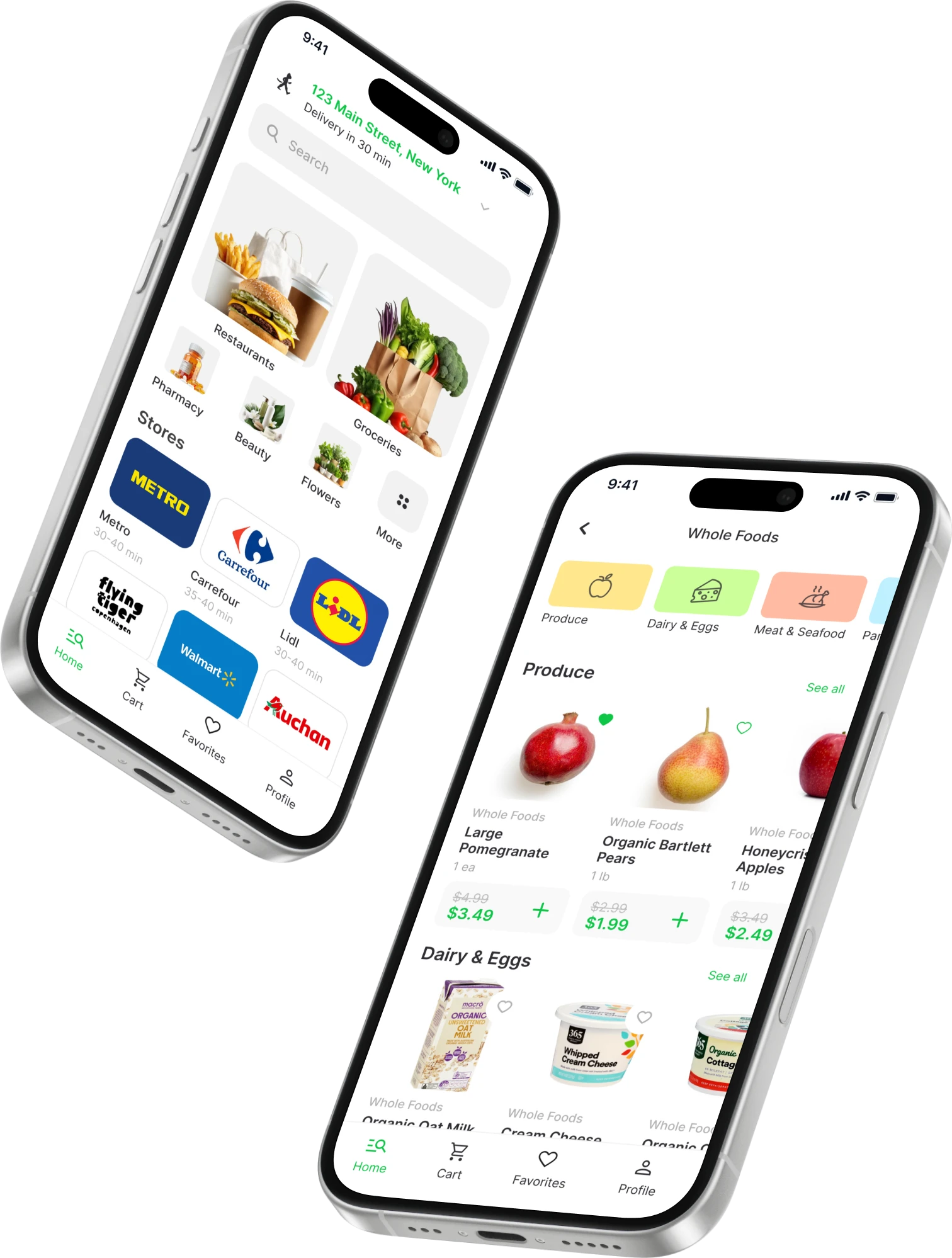
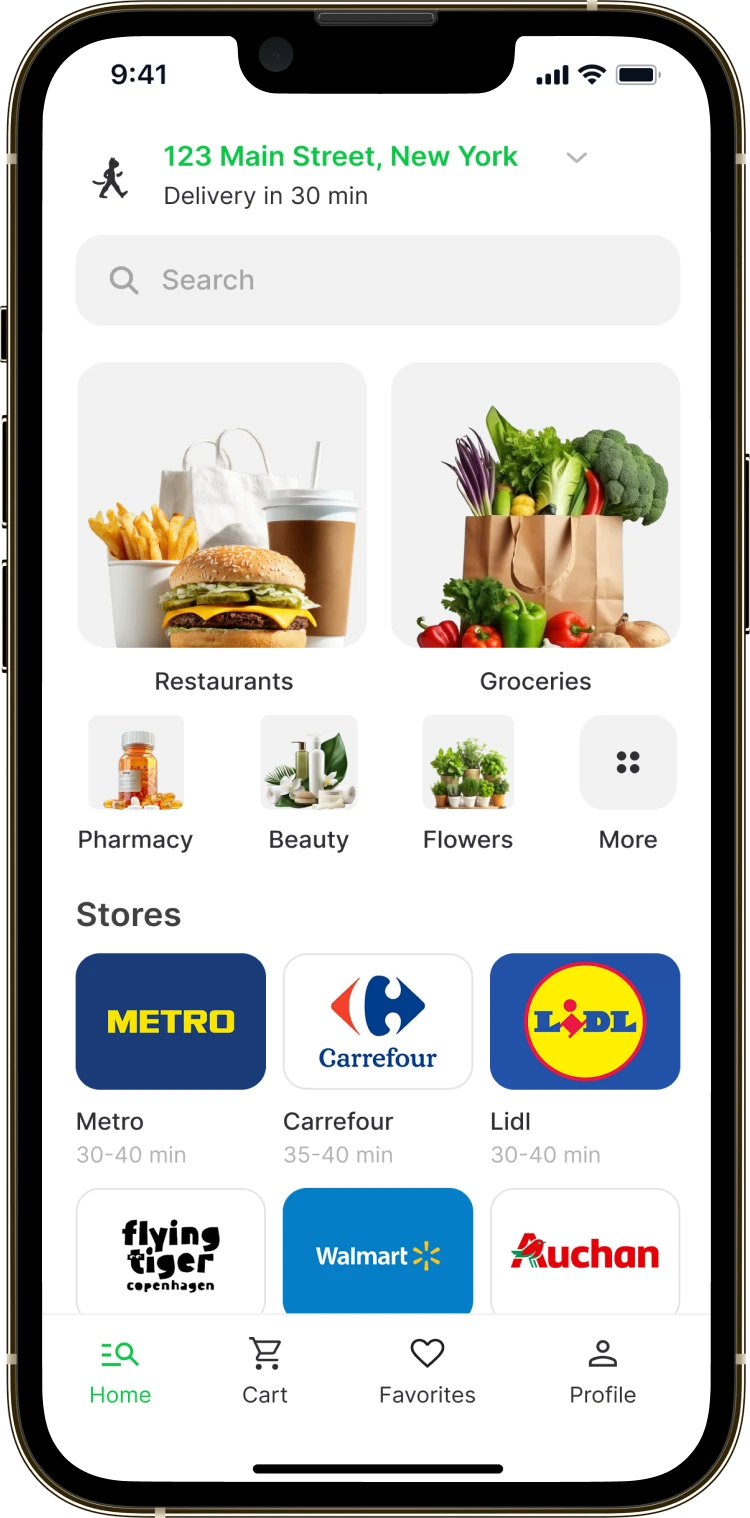
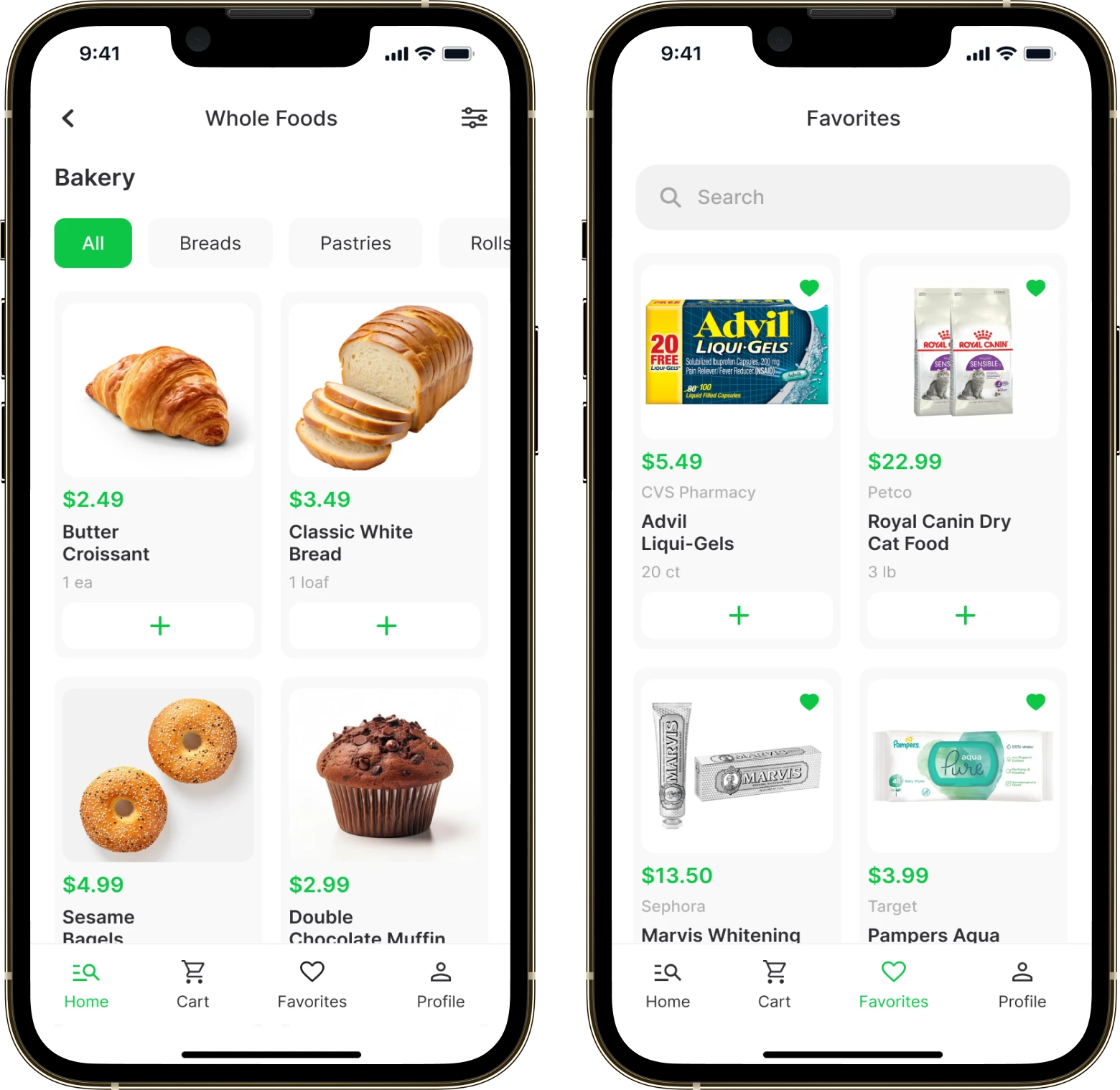
The user selects a city, searches for products, and browses stores, restaurants, and offers.
Shopping cart and ordering
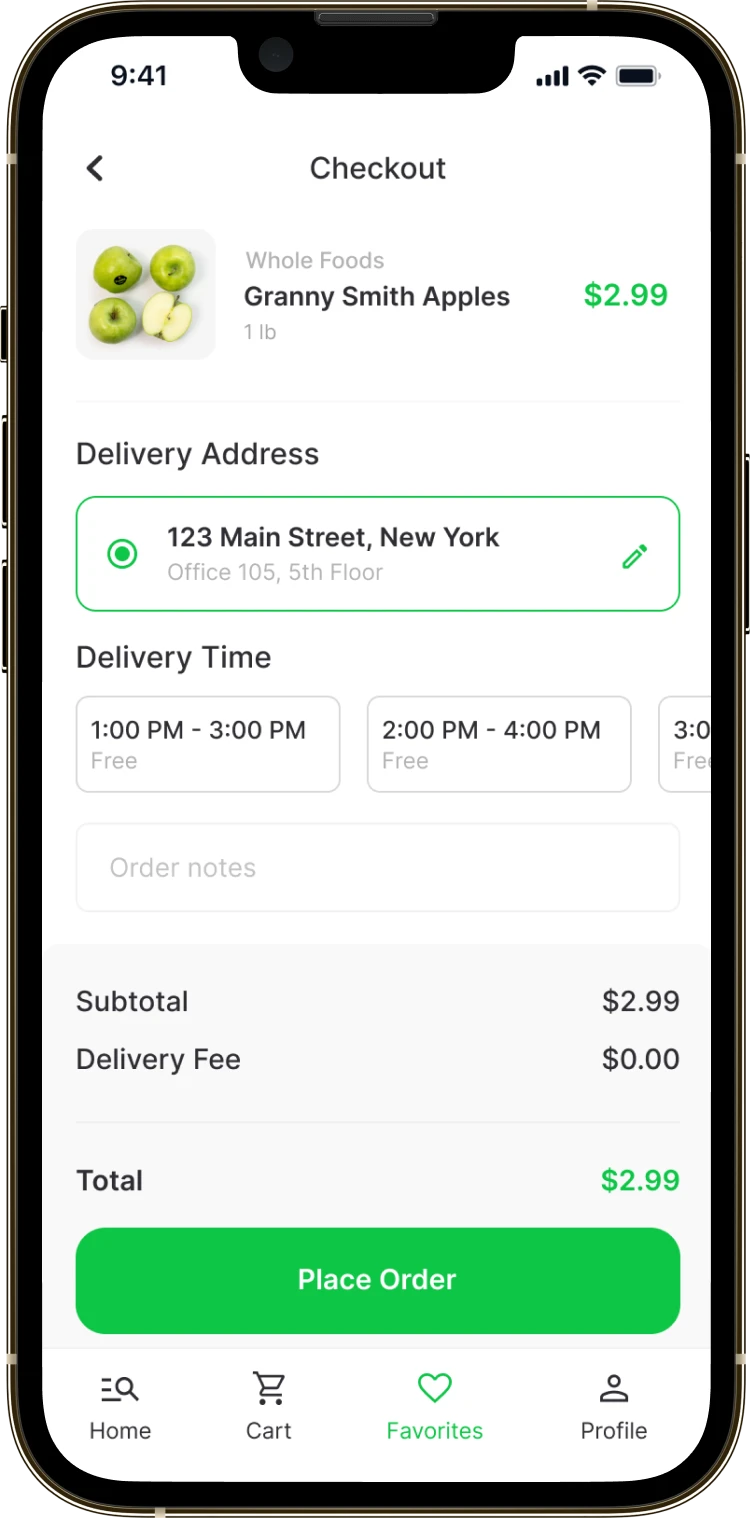
The customer places an order, applies discounts, chooses delivery, and completes payment.
Courier application
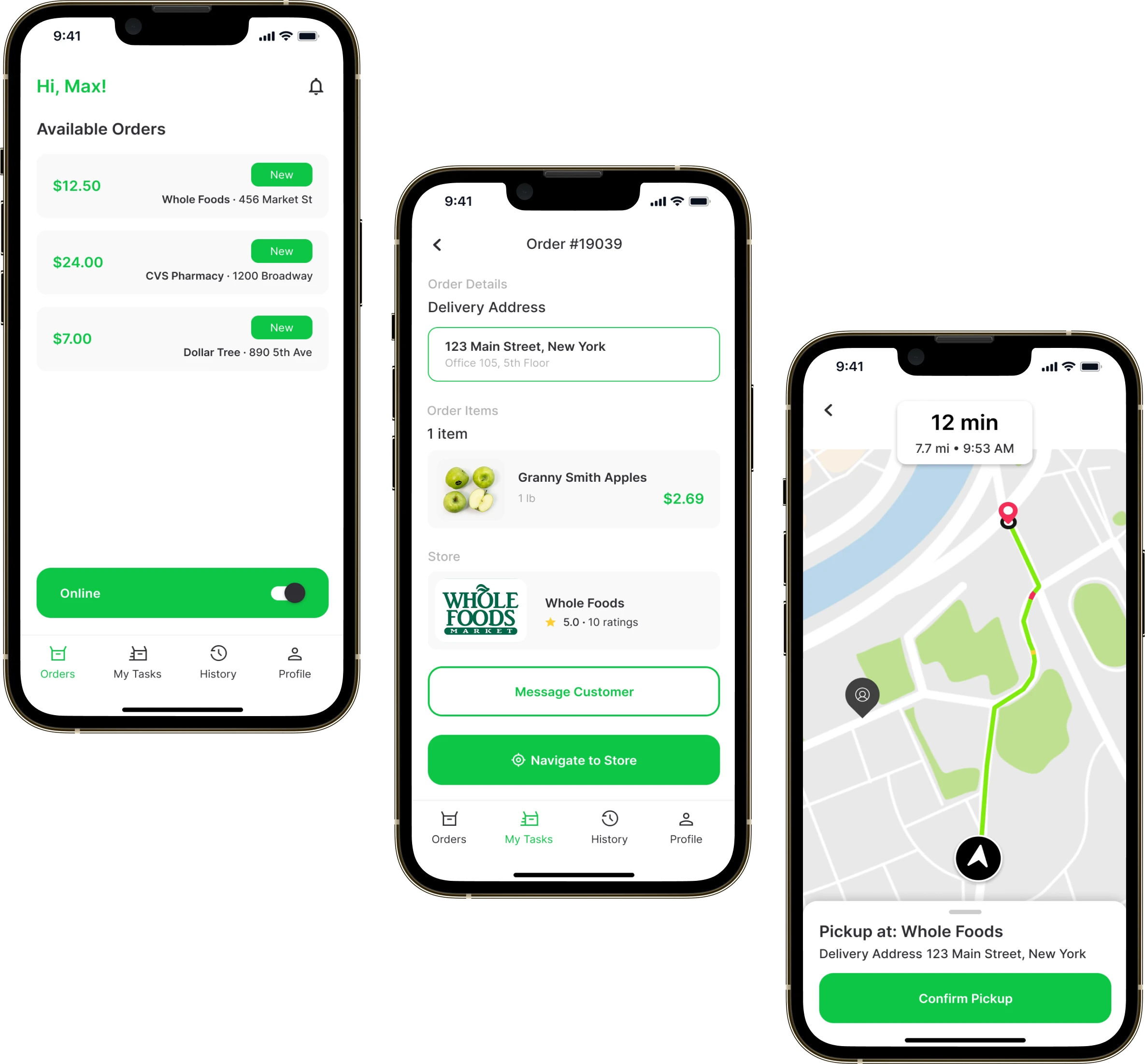
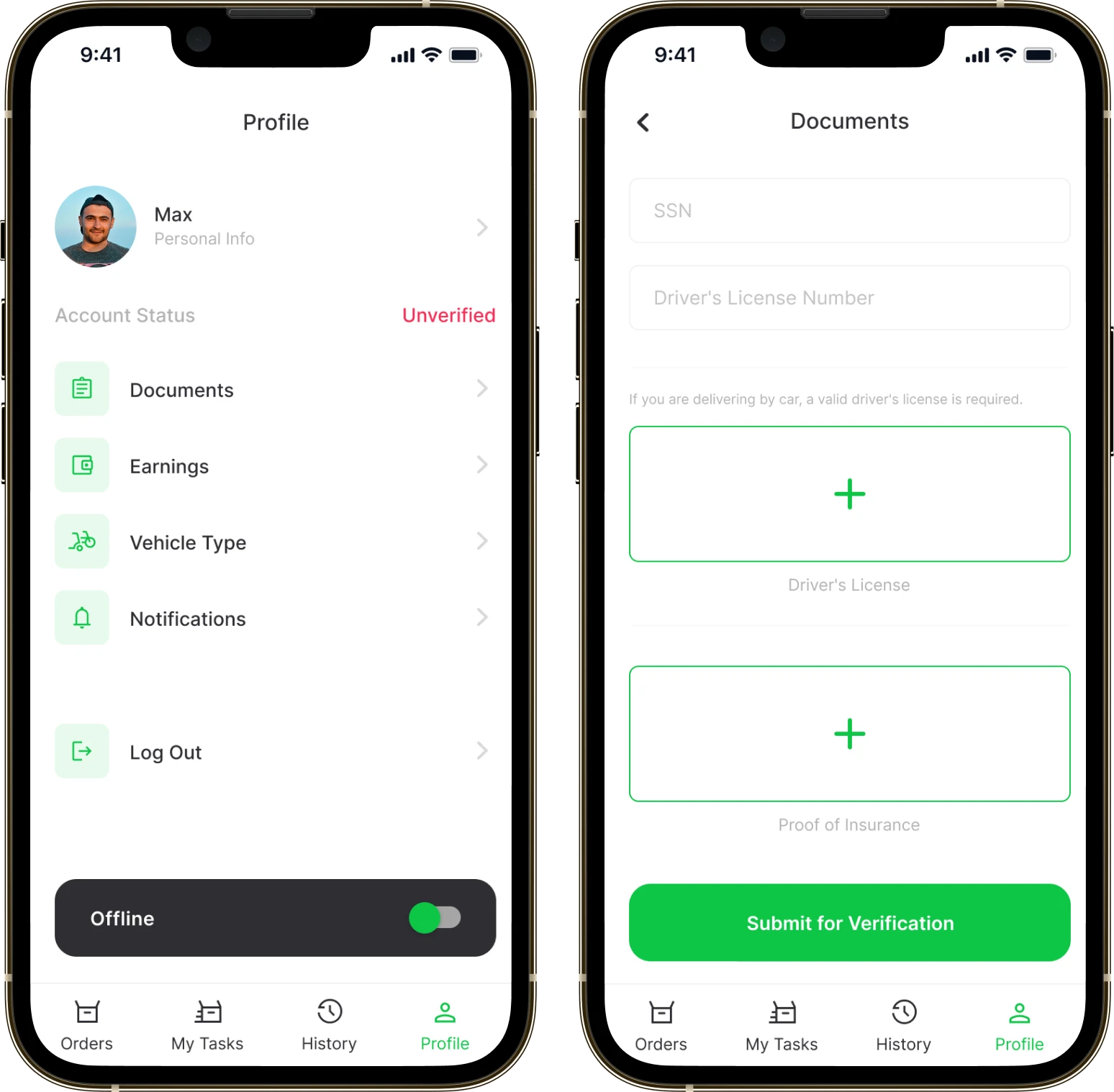
The courier registers, accepts orders, builds routes, and updates statuses.


Partner's web office
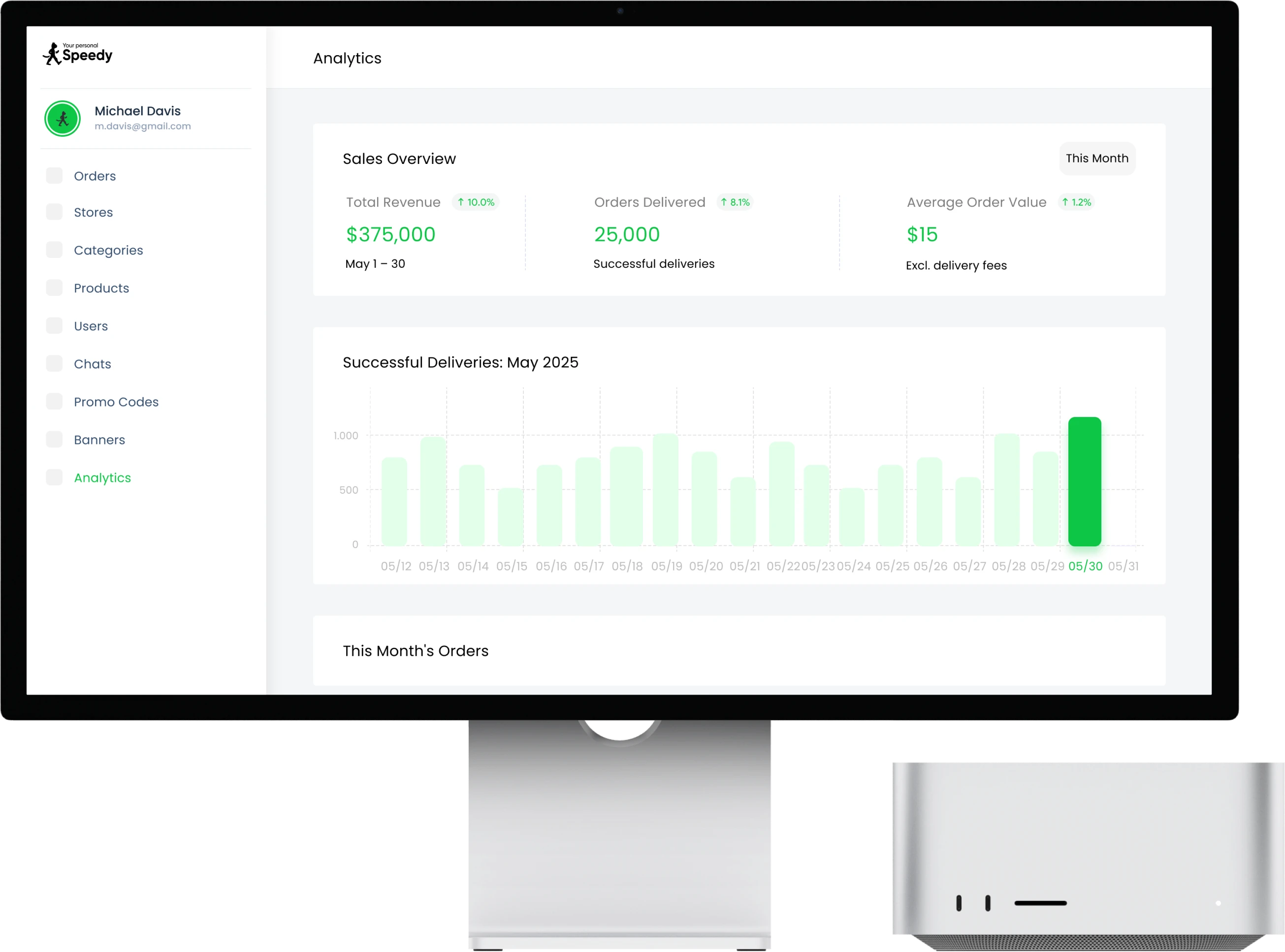
Stores and restaurants manage products, orders, delivery, schedules, and analytics.
Admin panel
The administrator manages the whole system: orders, users, products, support, and integrations.
Chats and support
All participants can chat in the system, and the user can contact support with file attachments.
Catalog and search
The catalog helps users quickly find products, dishes, stores, and restaurants. Users can select a city, search across categories, browse promotions, and apply filters to narrow results. If no matching items are found, the system provides clear feedback and helps users return to browsing without losing context.
Cart and checkout
In the cart, users can review selected items, change quantities, remove products, or clear the cart completely. During checkout, they can apply promo codes or gift certificates, choose delivery address and time, leave a courier note, and proceed to payment through the connected payment provider.


Delivery and map
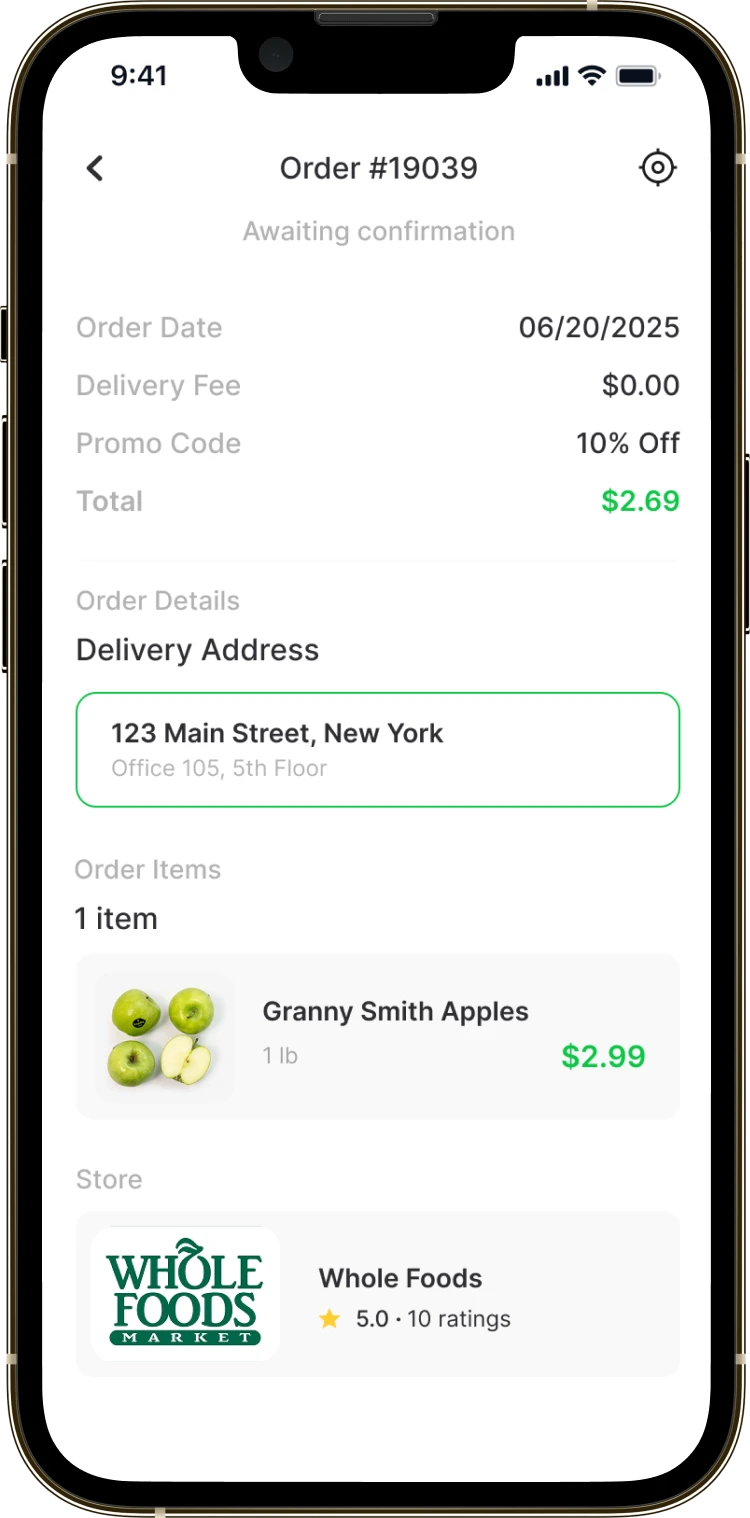
After placing an order, users can follow its status and track the courier’s location on the map in real time. The order card displays key details including order number, amount, delivery address, items, point of purchase, and courier information. At each step, the courier updates the status so all participants see current information.


Customer and courier flows
The customer profile includes personal data, saved delivery addresses, order history, notifications, and support requests. Couriers use a separate interface to register, upload documents, pass verification, accept orders, build routes, manage statuses, and track earnings. This separation keeps each role focused while maintaining one connected workflow.


Partner web office
Stores and restaurants manage their profile, products, pricing, discounts, stock, working hours, and delivery area through the partner dashboard. They can monitor new, active, delivered, and canceled orders, update statuses, and use analytics to manage daily operations more efficiently.


Result
We designed a scalable delivery ecosystem that brings customers, couriers, partners, and administrators together in one system. The platform covers the full delivery cycle — from catalog browsing and checkout to payments, tracking, communication, and operational management.
Achievements
Unified delivery platform

Multiple roles in one system

Ready to scale
Do you want to develop your own application?
Fill out the form and send it to us. We'll review your idea and contact you within 24 hours!
Would you like to submit another application?