
Understanding MVP: What It Is
So, what is an MVP?
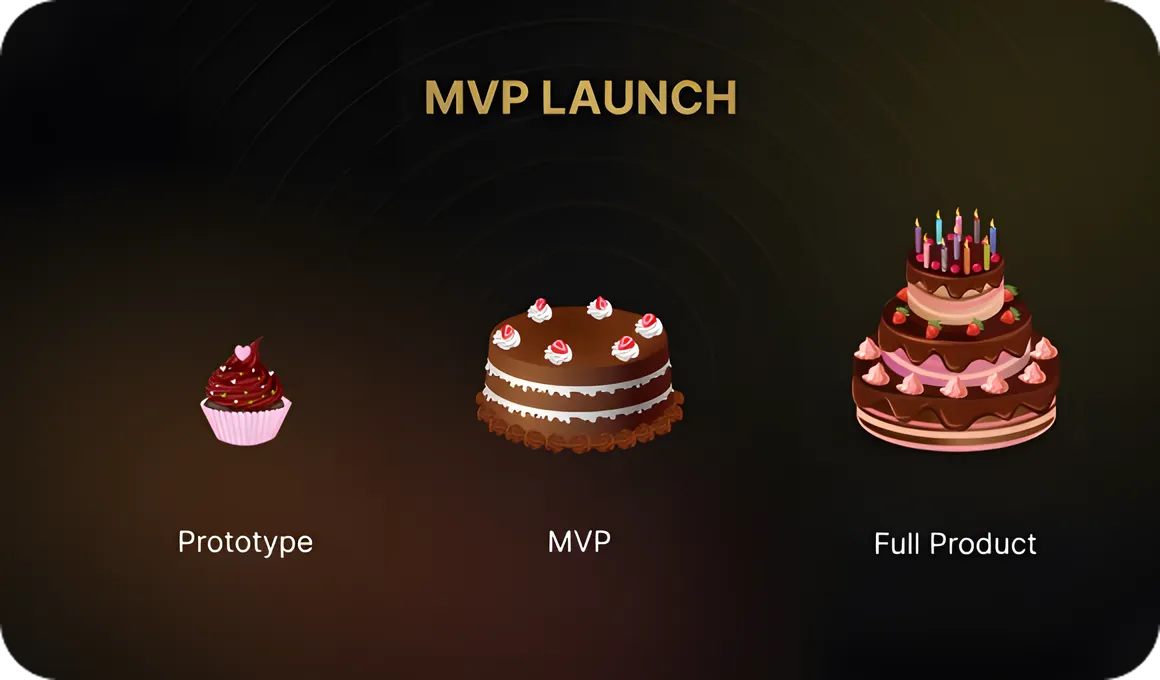
An MVP (Minimum Viable Product) is a basic version of a product that includes only the core features needed to test demand and gather early user feedback.
Its main goal is to help you test an idea quickly and with minimal investment, so you can decide whether it is worth putting more time and money into further development. An MVP gives you a clear understanding of which features matter, which ones need improvement, and which ones should be removed altogether.
Why You Shouldn’t Launch a Product Without an MVP
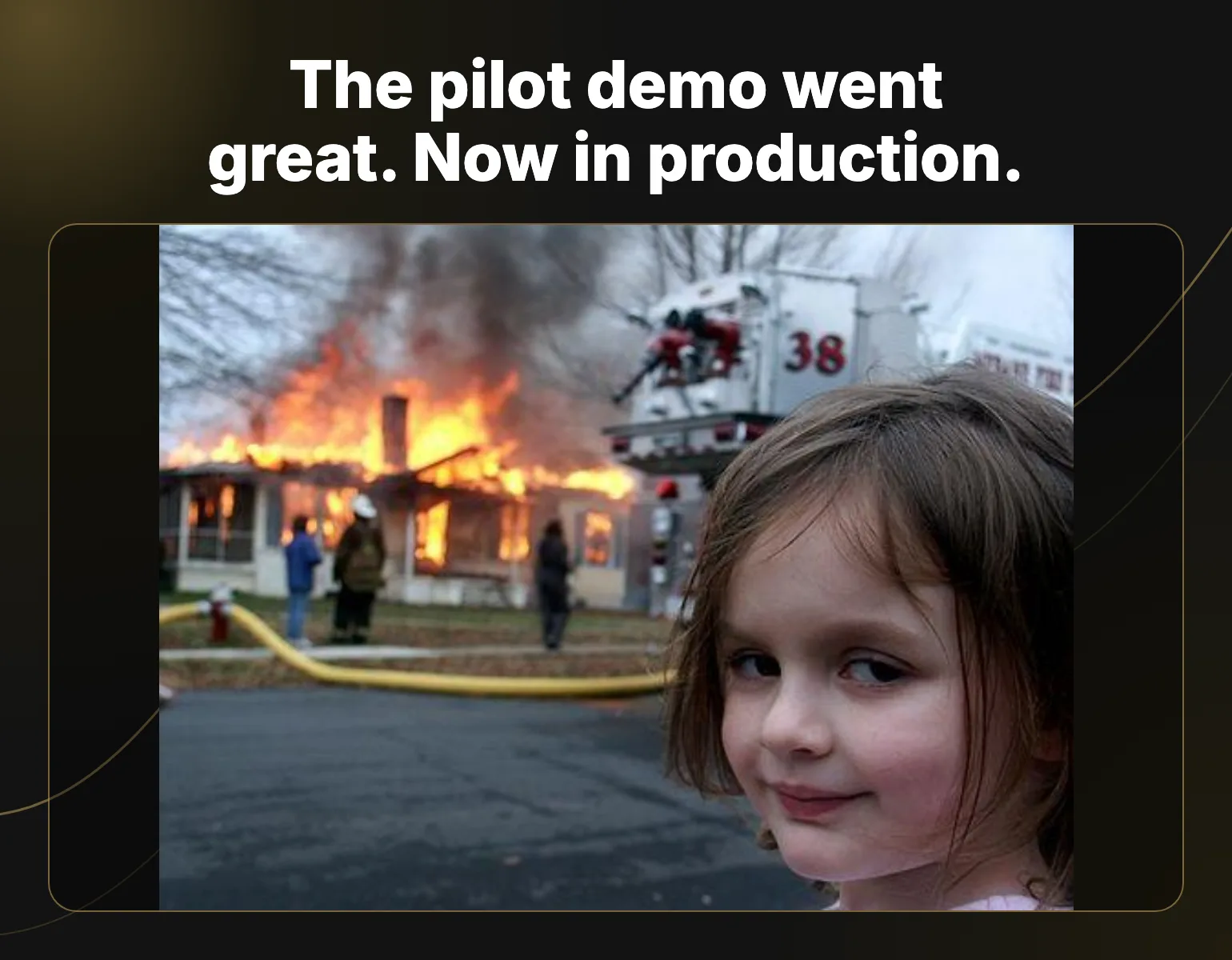
You can spend months — or even years — on development, invest a significant amount of money, and still end up with a product that people are not interested in, in a market already crowded with competitors. That is exactly why an MVP is one of the smartest ways to avoid failure and launch a product more strategically.
A basic version of the product helps you test the idea in real life and avoid wasting resources on features that may turn out to be unnecessary. Instead of building a castle on sand, a startup gets the chance to validate hypotheses, collect feedback, and improve the product based on actual user needs.
Without an MVP, launching a product becomes a gamble: either it takes off or it ends up being discarded. But why take that risk if you can validate demand in advance, test key features, and build something users genuinely want? An MVP is your chance to launch deliberately and with a real prospect of success.
Successful Startups That Began with an MVP
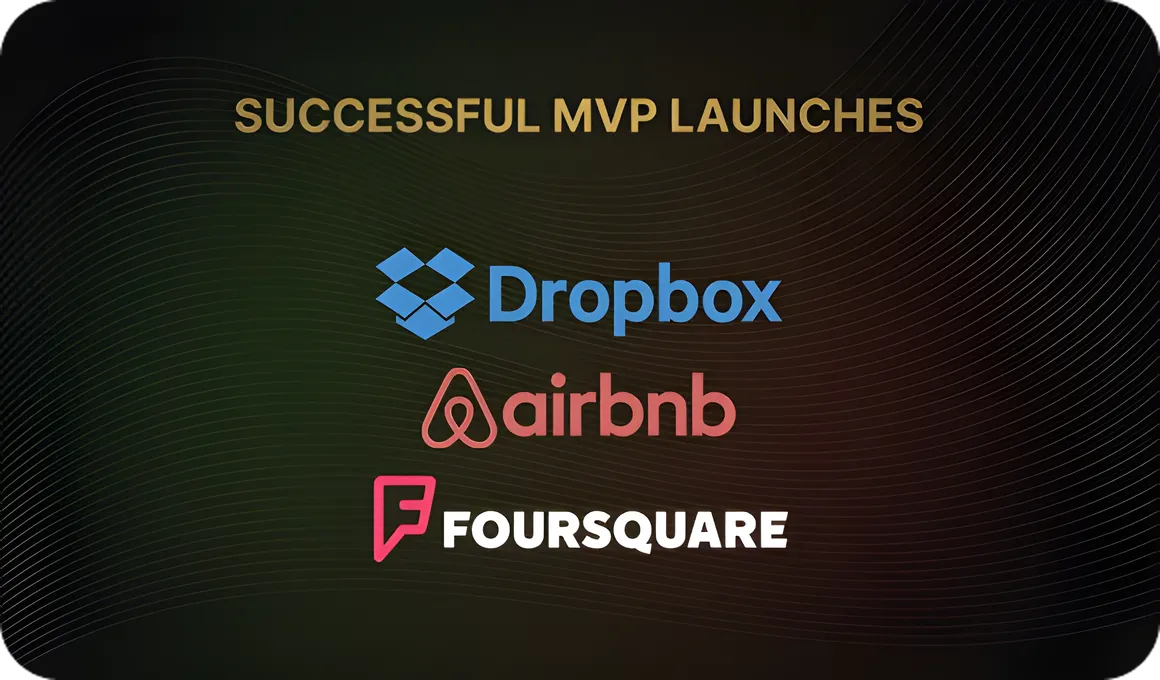
There are many well-known examples of successful companies that started with an MVP.
Dropbox, for example, began with a simple video demonstrating how the service would work. This allowed the team to measure user interest before the actual product was even built.
Airbnb initially tested its idea using a single apartment, offering guests inflatable mattresses to see whether this type of accommodation would be in demand.
Uber launched a pilot version of its app that simply connected users with drivers. All additional features came later.
Amazon started as an online bookstore to test the e-commerce model, and only after that expanded into a broad product marketplace.
Spotify initially offered limited access to music in order to test user interest in the streaming model before expanding its library and feature set.
WhatsApp was originally created as a status-sharing app, but after receiving feedback from users, it evolved into the messenger we know today.
How to Build an MVP: Key Development Steps
If you skip important stages of MVP development, you may end up with a product nobody needs or one that cannot compete in the market. To avoid that, let’s go through the key steps in building an MVP.
Market Research and Data Analysis
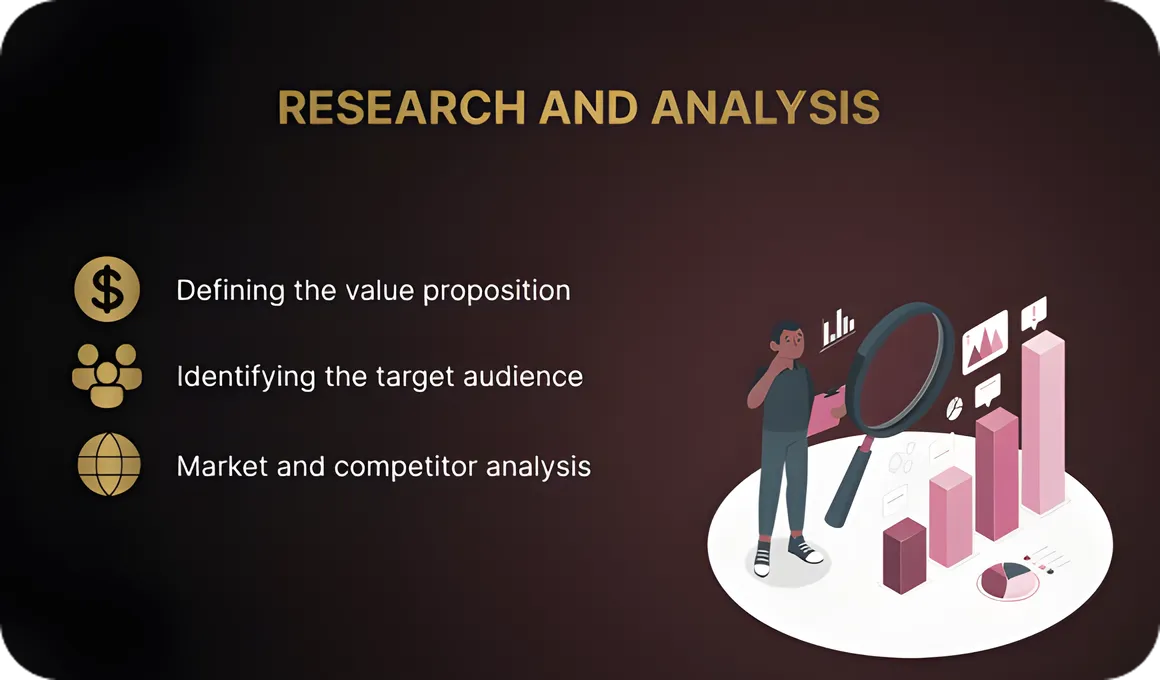
Who are your customers? Defining the target audience
The first step is to define your target audience: who are your potential users, what pain points do they have, and what tasks do they want to solve with your product? The better you understand your audience, the more accurately you can build a solution that will actually be in demand.
Understanding the competition: what already exists on the market
Look at what solutions already exist and study their strengths and weaknesses. This will help you avoid repeating other companies’ mistakes and identify opportunities to differentiate your product. Your idea may already exist in some form, but perhaps existing products lack an easy-to-use interface, certain functionality, or a solution to a specific customer problem.
What makes you better? Formulating your value proposition
Why should users choose your product? What is its main advantage? What makes it better or more convenient than the alternatives? Your unique advantages are what will attract your first users and give them a reason to stay.
Defining the Feature Set
At this stage, you need to understand which features are truly necessary to solve the user’s core problem and which of them should take priority. Let’s look at the main stages of MVP planning that help you make the right decisions.
Focusing on what matters: which features are actually necessary
You need to define the minimum feature set that will allow the product to solve the user’s main problem. The goal is not to complicate the product, but to focus on its essence.
Imagine you are building a task planning app. The key features might be task creation, setting deadlines, and receiving notifications. Everything else is an additional feature that can be added later.
Feature prioritization: deciding what matters first
Once you have identified the feature set, the next step is to prioritize it. Some features are critical for the product to function, while others can be implemented later. Ranking helps here: evaluate each feature by its importance and implementation complexity.
For example, returning to the task planning app, the ability to create tasks and receive notifications would be high-priority features. Calendar integration or the ability to share tasks with a team could be introduced later.
Designing the user journey: creating interaction scenarios
Now it is time to think about how people will interact with the product. User scenarios are essentially a route: from the first launch to completing the main task.
For example, a task planner scenario might look like this: a user enters the app, creates a task, sets a deadline, receives a reminder, and marks the task as completed. The simpler and more intuitive the flow, the better.
Well-thought-out user scenarios help avoid confusion and make the product pleasant to use. At the MVP stage, this is especially important, because users should quickly understand how to use the product and what value it gives them.
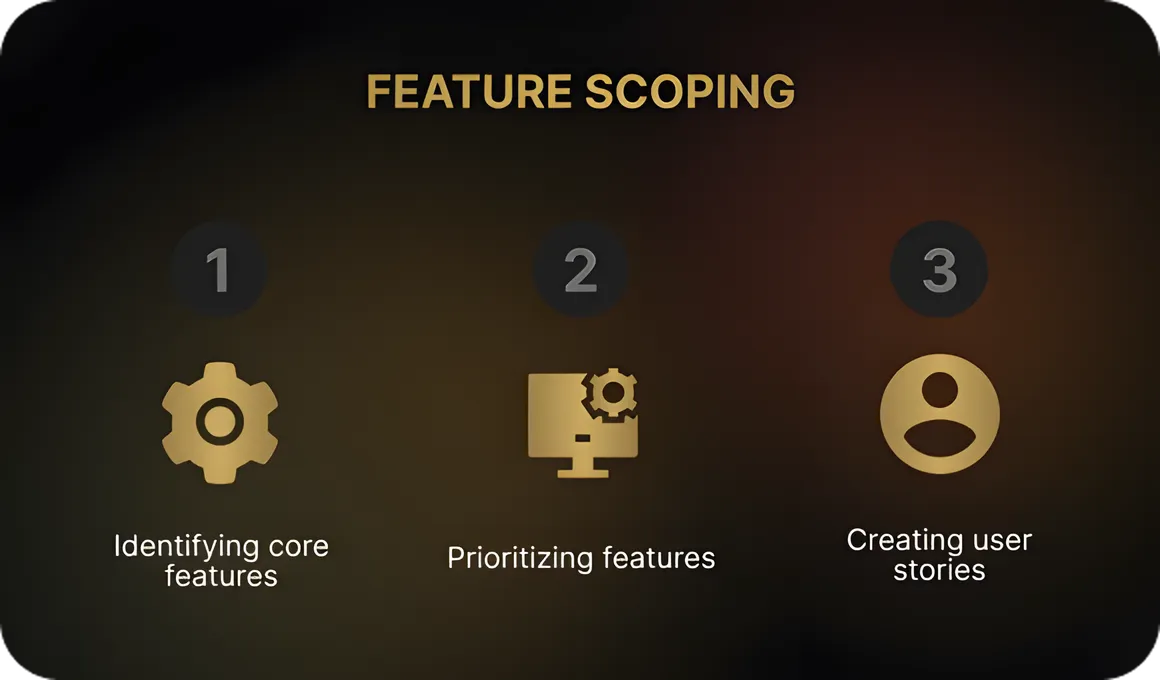
To understand what an MVP is in software development, it is important from the start not to try to build everything at once. An MVP should include only the features needed to validate the hypothesis and attract the first users.
Prototyping and Design
This is the stage where the service begins to take shape visually and the user experience starts to form.
Building the foundation: creating interface wireframes
Prototyping starts with interface wireframes — the skeleton of the future product. At this stage, it is important to create a screen structure and platform layout that make the product easy and intuitive to use.
Wireframes can be sketched by hand or created in tools like Figma or Sketch. What matters most is clearly defining where each element will be placed: where the button will go, how the user moves to the next screen, and what actions are available at each step.
User focus: testing usability
Once the wireframes are ready, it is important to test usability and navigation. Let potential users try the prototype so you can see how easily they complete core tasks.
Pay attention to the details:
- Is it easy to find the necessary information?
- Is the interface clear?
- Is the navigation intuitive?
This feedback helps refine the design and fix problems before full development begins.
The final touch: design aligned with the brand
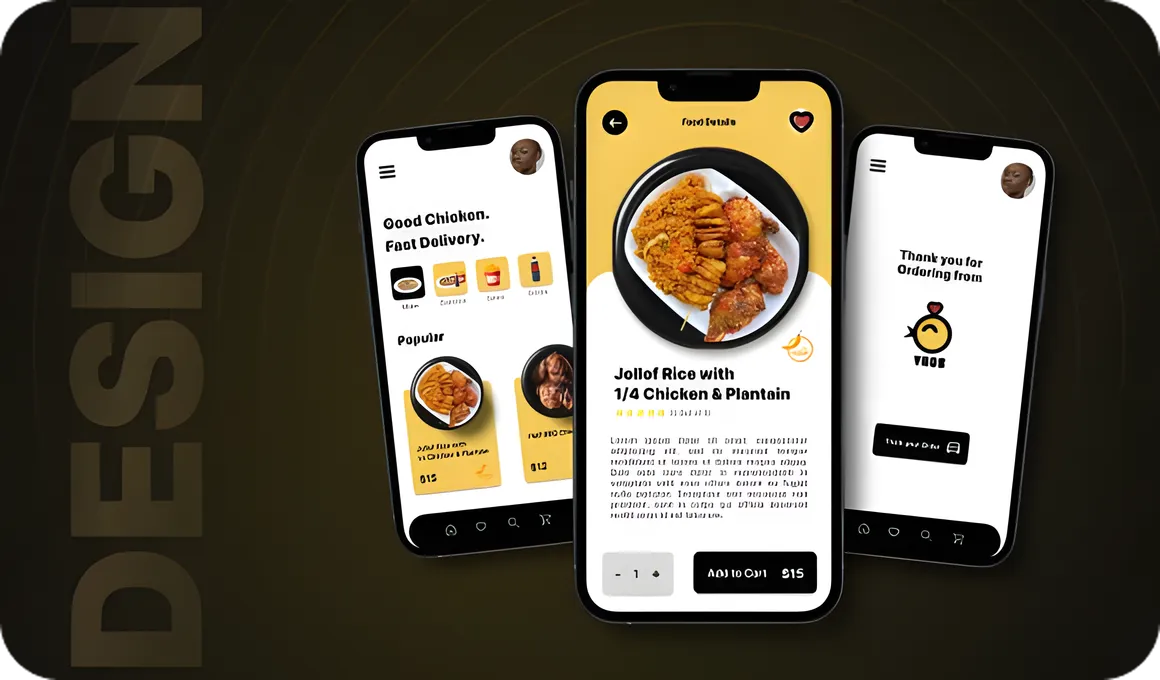
Next comes the final visual design. At this stage, the service needs to reflect the brand and comply with UX/UI requirements. Colors, fonts, icons, and buttons should all work together harmoniously and support the overall product concept.
The final design should not only look appealing, but also maintain usability. A consistent and attractive design helps build trust and strengthens the product’s market positioning.
Development
Now comes the most exciting part — development.
What is MVP development in practice? It is the stage when the product comes to life and turns from an idea into a working tool.
Building the logic and interface
The first development step is to create both the server side and the client side.
The server side is responsible for data processing, business logic, and interaction with external services.
The client side is the interface users interact with.
In simple terms, the server is the brain of the application, where all calculations happen and data is stored, while the client side is the face of the product that users see.
For example, if you are building a taxi booking platform, the server side would process ride requests and store driver and user data, while the client side would display the map and booking buttons.
It is important not to overcomplicate the code or try to implement every possible feature. Remember: the purpose of an MVP is to test the idea quickly and with minimal cost.
Service integrations: adding critical functionality
At the development stage, it is important to connect third-party services such as payment systems, maps, notifications, and other features critical to the product.
For example:
- if your MVP includes payments, payment system integration is mandatory;
- if the product includes geolocation or maps, you need APIs such as Google Maps or Mapbox.
Preparing for testing
Before handing the product over to QA, you need to make sure the core functionality works correctly and there are no critical issues.
This stage includes:
- fixing obvious bugs;
- checking server stability;
- verifying correct UI display;
- validating key usage scenarios.
The goal is to make sure the platform will not crash under normal use. Careful checks at this point save time and effort later, when you are preparing for a broader launch.
Testing
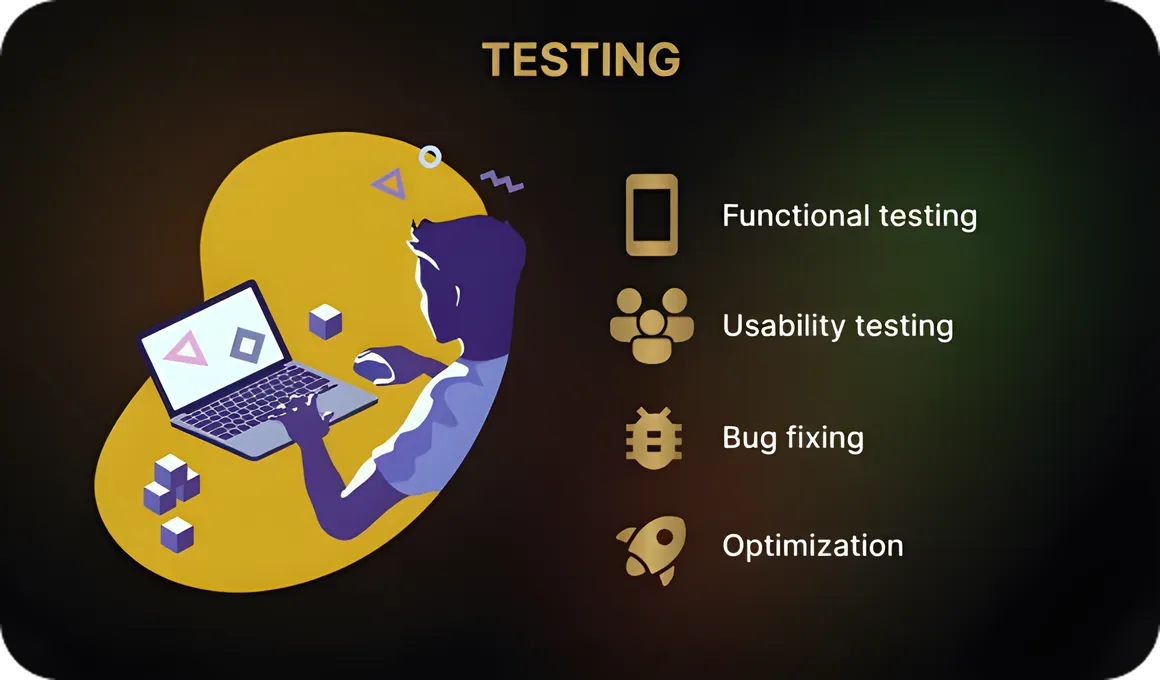
At this stage, core features are validated, bugs are fixed, and performance is optimized.
Checking functionality
Once the service is ready, it is important to make sure every feature works as intended. Each function is tested — from user registration to order payment or notification delivery.
Testing can be:
- manual, where the team checks features by hand;
- automated, using dedicated tools.
For example, if you have a restaurant reservation app, you need to verify that restaurant search, table booking, confirmation, and payment all work without issues.
Do not hesitate to involve real users in testing. Their feedback can reveal issues that may remain unnoticed during internal development.
Fixing errors: bug resolution
After testing, bugs will inevitably appear. That is completely normal. Your job is to fix them quickly.
Bugs can range from:
- minor visual glitches,
- to critical issues that can stop the app from working entirely.
It is important to log and fix bugs as they are discovered, rather than letting them pile up all at once.
Making it better: optimizing performance and usability
Once the bugs are fixed, it is time to improve the product further. Optimization includes both performance and user experience.
Performance matters: the service should load quickly, not freeze, and not drain the device battery.
You should also analyze how easy it is for users to complete tasks. You may need to simplify navigation or improve certain design elements.
Launch and Feedback Collection
Congratulations — the MVP is ready, tested, and optimized. Now it is time for the final step: launching the product and collecting feedback.
Publishing the app
The first step after development is publication. If the product is mobile, it can be launched in the App Store or Google Play. For web applications, cloud hosting or your own server may be more appropriate.
It is important to choose the platform that best matches your target audience.
If the product is not yet ready for a full store launch, or if you want to test the idea on a smaller group first, you can give access through beta testing using tools like TestFlight or Google Play Beta.
At this stage, it is important to make sure the service is stable, easy to install, and easy to start using.
Marketing support
Launching a product is a great reason to start telling people about it. Even with a limited budget, you need a promotion strategy.

You can use:
- social media;
- a product landing page;
- targeted ads;
- bloggers or influencers in your niche.
Marketing support helps not only attract the first users, but also gather valuable feedback. Tell your audience what problem the service solves and why it can improve their lives.
And do not forget word of mouth — ask your first users to share the product with friends. Personal recommendations still work incredibly well.
Collecting and analyzing feedback: listening to users
Once the product is launched, the most important phase begins — collecting feedback. This is the core purpose of any MVP: to validate the idea through real user input.
Monitor:
- reviews in app stores,
- user conversations on social media,
- behavior through Google Analytics or Firebase.
Pay attention to metrics such as:
- how many users complete registration;
- which features are used most often;
- where users encounter difficulties.
It is important not just to gather feedback, but to analyze it. Users may point out problems not identified during testing, or suggest improvements that make the product significantly better.
Update the platform regularly, fix issues, and add useful features based on what you learn.
Launch and feedback collection are not the end — they are the beginning. This stage helps you not only enter the market, but also gain valuable insights for future product development.

Improvement and Scaling
So, the MVP has launched successfully, users are leaving feedback, and you are starting to see the first results. Now it is time for improvement and scaling.
Evaluating the data: understanding what works and what doesn’t
The first step in improvement is careful analysis of the data collected after launch. Reviews, in-product behavior, and usage metrics become your main source of truth.
Look at:
- which features are used most often;
- where users run into problems;
- what kind of feedback they leave.
If the app is slow or users lose interest after a certain stage, that is a signal to act. Data analysis helps you make informed decisions about what should be improved and what can remain unchanged.
Expanding capabilities: adding the right features
Adding new features helps the product stay competitive and meet user expectations.
For example, if you run a food delivery platform, users may ask for:
- real-time order tracking;
- scheduled ordering in advance.
By implementing these requests, you improve the experience and strengthen customer loyalty.
Optimizing processes: improving performance and security
Improvement is not limited to adding new features. It is equally important to improve what already exists: optimize performance, strengthen security, and refine the interface.
What users value most:
- fast response times;
- reliable data protection;
- ease of use.
Make sure:
- your servers can handle the current load;
- pages load without delays;
- the interface remains intuitive.
Security is especially important if the service handles personal data or financial information. Run regular security tests and keep protection measures up to date.
Preparing for growth: scaling the app
Scaling is the process of preparing the product for growth: more users and expansion into new markets.
First of all, you need to make sure the architecture can handle increased load. This may require:
- improving server infrastructure;
- optimizing code;
- moving to more powerful cloud solutions.
It is also important to adapt the product for new markets:
- translate the interface into other languages;
- account for cultural differences;
- tailor marketing campaigns to local specifics.

MVP with AI: What Actually Gets Faster, and What Doesn’t
Over the past two years, one more question has attached itself to every MVP conversation: will this go faster and cost less if we bring in AI? It is really two questions, and confusing them is expensive.
The first is about the tool: does AI help you build the first version faster? The second is about the product: should AI sit inside the MVP as the feature you are betting on? The answers are not the same.
What AI genuinely speeds up
Machines are fastest at first drafts. Interface scaffolding, routine forms, data parsing, test fixtures, the first pass at copy — work that used to take days now takes hours. This is not a vendor promise: in a Sonar survey of more than a thousand developers, roughly 42% of the code reaching the repository is machine-written, and DORA puts AI tool usage at 90% of teams.
For an MVP that is exactly the effect you want. The hypothesis shows up on screen in a week rather than a month.
Where the speedup is an illusion
Then it gets uncomfortable. METR ran a rare controlled experiment on this: experienced developers worked on real tasks in their own repositories, some with AI and some without. With AI they took 19% longer — and were convinced they had been faster.
The bottleneck moved. Writing code got quicker, checking it did not. In that same Sonar survey, 96% of developers say they do not fully trust the correctness of machine-written code, yet only 48% review it before every commit. And 38% say reviewing AI code takes more effort than reviewing a colleague’s.
What you pay on version two
The speed of the first version is billed to the next one. GitClear went through 623 million code changes across three years and found two things: duplicated blocks rose by 81%, and the share of code that gets properly rewritten fell from 21% in 2022 to 3.8%. Put plainly, code keeps arriving and nobody tidies it any more.
For an MVP that is often a fair trade. If the plan is to test demand and throw the prototype away in a month, internal quality is secondary. The trade stops being fair the moment the MVP survives and turns into a product: the speed of those first weeks is repaid in months of untangling.
So decide at the start. Ask yourself and your development partner one question: what do we do with this code if the hypothesis holds?
AI as a feature inside the product
The second question is harder. The temptation is obvious, since an AI feature makes a product easy to show to an investor. But a demo and a working product are different things. IDC measured it in 2025: 88% of AI pilots never reach wide deployment.
The blocker is rarely the model. It is the data, and what happens after the machine answers. A concrete example from an open benchmark on invoices: the header of a document is read correctly around 90% of the time, the line items in the table around 58%. The same word — accuracy — means different things in different parts of one document, which is why nobody can promise it up front.
Hence a practical rule for the first version. Put an AI feature in the MVP when that feature is the hypothesis you are testing. If the product works without it, ship without AI and add the feature in version two, once you have data and know what to measure. We walked through that choice in detail in our piece on implementing AI in business: where to start and when it is still too early.
The short version. AI shortens the road to your first version and lengthens the road from that version to a product. For an MVP that is a good trade, as long as you know which trade you are making.
Final Thoughts: Why Every Project Needs an MVP
Today we explored what an MVP is and why it plays such an important role in any product launch. It is one of the best ways to test an idea in practice, reduce risks, and save resources.
On top of that, an MVP helps you get user feedback quickly, adjust your development direction, and move toward success with confidence.
Every project is unique, and at Beetrail, we know how to turn your idea into a working product. We handle the full development cycle — from analysis and prototyping to technical support.
You do not have to worry about the complexity — we will take care of everything for you.
Tell us about your idea, and we will help bring it to life. Submit a request today and take the first step toward a successful product launch.