05.06.2026
Time to read:
4
min
Cross-platform app development
Development
Insights
Mobile apps have long since stopped being just an addition to a website — they are now the primary way of interacting with users. We place orders in just a couple of taps, chat, read the news, and even manage businesses right from a smartphone screen. It makes sense that companies want to be present on all platforms at once — both iOS and Android.
But developing two separate native versions is a long, expensive, and resource-intensive path. Two teams, two technology stacks, and twice as much time spent on testing and updates. It’s no surprise that more and more companies are turning to a different approach — cross-platform mobile app development.
Cross-platform development makes it possible to create a single app that works equally well across different operating systems. It saves time, money, and effort. And for startups and growing businesses, it is also a way to launch faster and test a hypothesis without unnecessary costs.

What Cross-Platform Development Is
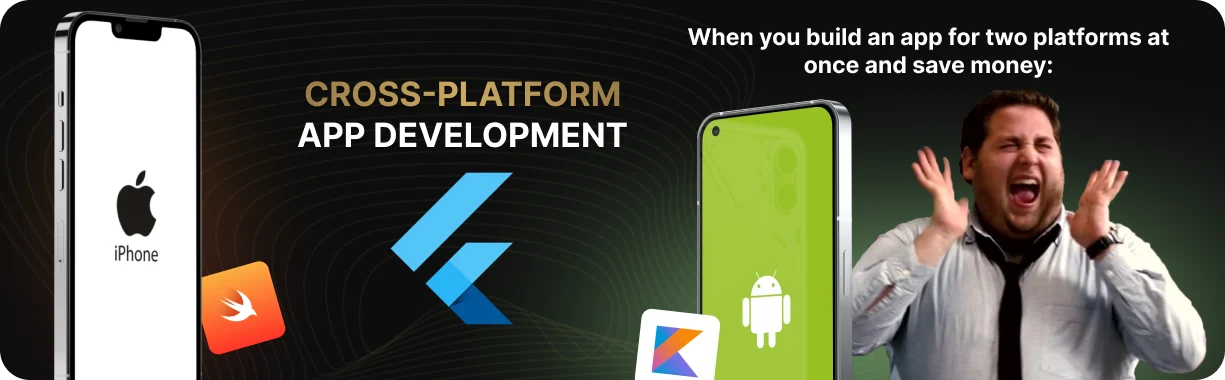
It is a way to create a single service that works on both iOS and Android using one shared codebase. In other words, instead of writing two separate versions in different languages — for example, Swift for iOS and Kotlin for Android — the developer writes one universal codebase, which is then adapted for both platforms.
What’s the Difference Between Native and Cross-Platform Development?
Unlike native development, where a separate app is built from scratch for each operating system, cross-platform follows the principle of “write once, run anywhere.” This saves resources, speeds up time to market, and simplifies maintenance.
The native approach involves separate development for iOS and Android, using different programming languages, frameworks, and technical solutions. Yes, this method gives you maximum control over performance and lets you use all device capabilities to the fullest. But it also requires more time, more effort, and more team resources: in essence, you are running two projects in parallel and synchronizing them at every stage.

In that sense, cross-platform may sound like a compromise, but in practice it is increasingly becoming a deliberate choice — especially for startups and businesses that want to test an idea quickly without getting stuck in a complex and expensive architecture.
Why Companies Choose Cross-Platform Mobile Development
Cross-platform frameworks are becoming more popular for a reason — they offer a number of clear advantages:
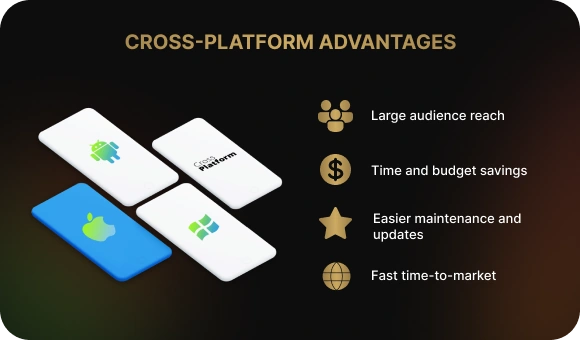
Time and cost savings.
Instead of building two separate teams for iOS and Android, you work with one shared codebase. That means fewer development hours, fewer people on the team, and lower costs. This is especially valuable for startups, where every ruble and every day matters.
Faster time to market.
Speed is a key factor in a competitive environment. With cross-platform solutions, you can launch a service on both platforms at once without wasting time duplicating work. Businesses get a head start and can collect user feedback sooner.
Simplified support and updates.
When you have one codebase for everything, it becomes easier to release updates, fix bugs, and make improvements. No more “Android update next week” — everything happens simultaneously and in sync.
Broader audience reach.
The platform works on both iOS and Android, so you don’t lose any users. As a result, your reach expands and your chances for growth and scaling increase.
Who Cross-Platform App Development Is Right For
Not every project needs a separate version for each platform. In many cases, it is much more practical to choose a cross-platform approach — especially if you need to launch quickly, save money, and test a hypothesis. Here’s who this approach is best suited for:
Startups and small businesses
When the budget is limited and there’s no time to waste, it’s important to test the idea quickly in real conditions. A cross-platform approach helps launch an MVP of a mobile service with minimal investment and immediately cover all users — both iPhone and Android users.
Projects with tight deadlines
If you need to enter the market “yesterday,” cross-platform can speed up the process by 1.5 to 2 times. A single codebase means there is no need to develop two apps in parallel. It’s a great option if you are preparing a promo app for an event, a product launch, or an advertising campaign.
Companies with a broad audience
When a service is designed for mass users, it is important to be available everywhere. With cross-platform frameworks, you can release on iOS and Android simultaneously while maintaining unified business logic, design, and user experience. This is especially relevant for marketplaces, subscription services, delivery apps, and any online platforms.

Tools That Make Cross-Platform App Development Easier
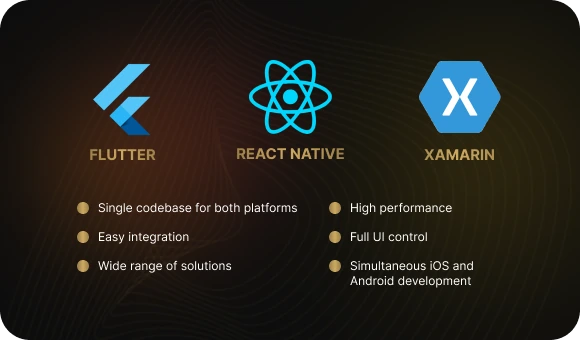
There are proven frameworks on the market that allow you to write one codebase for all platforms — quickly and with great results. Here are three of the most popular tools worth paying attention to:
Flutter.
A framework from Google that uses the Dart language. It is loved by many for its high performance and visual flexibility. Flutter makes it easy to build beautiful, responsive interfaces that look native on both iOS and Android. It also has a standout feature — hot reload — which lets you make changes to the code and instantly see the result. This significantly speeds up development and testing.
React Native.
A framework from Facebook based on JavaScript. It is one of the most popular tools thanks to its strong community and solid compatibility with web development. If you already have a team familiar with React, the learning curve will be minimal. The downside is that integrating native modules can sometimes be challenging, especially for non-standard projects.
Xamarin.
A solution from Microsoft built with C#. It integrates well with the .NET ecosystem, which is why it is often used in enterprise projects and internal systems. It is considered reliable, but in recent years it has lost popularity to Flutter and React Native — and it is not always easy to find Xamarin specialists.
Examples of Successful Cross-Platform Apps
Cross-platform solutions have long gone beyond MVPs and startups. Many major companies successfully use this approach for large-scale, reliable products. Here are a few strong examples:
Google Ads (Flutter)
The Google Ads app, developed using Flutter, allows advertisers to manage their campaigns directly from a mobile device. Thanks to Flutter, the app’s interface is fast, responsive, and equally convenient on both iOS and Android.
Alibaba (Flutter)
The Chinese e-commerce giant Alibaba uses Flutter to build some of its mobile services. This allows the company to roll out new features quickly and ensure stable performance across platforms.
Reflectly (Flutter)
Reflectly, a personal journaling app for mood tracking, was built using Flutter. Thanks to this, the developers were able to create a beautiful and smooth interface that works equally well on all devices.
Instagram (React Native)
Some parts of Instagram — such as the publishing screen and push notifications — were implemented using React Native. This allowed the team to speed up development and simplify code maintenance across both platforms.
Uber Eats (React Native)
Uber Eats uses React Native for its courier management panel. This solution helped the company scale the platform quickly and ensure stable performance across different devices.
Conclusion
The world of development is changing, and cross-platform development is becoming an increasingly natural choice for businesses. If this approach once seemed like a compromise, today it is a real way to save resources, launch faster, and maintain quality.
Is it the right fit for you? That depends on your goals. But if you want to test an idea, launch an MVP, or simply reach users faster, it is at least worth considering. Choose your tools thoughtfully, keep your project goals in mind, and don’t be afraid of new approaches.
Do you have an idea you want to launch and test quickly?
The Beetrail team can turn your concept into a real app that works, attracts users, and scales.
Ready to take the first step? Message us — we’ll discuss your idea and suggest the best path to launch.
What Cross-Platform Development Is
It is a way to create a single service that works on both iOS and Android using one shared codebase. In other words, instead of writing two separate versions in different languages — for example, Swift for iOS and Kotlin for Android — the developer writes one universal codebase, which is then adapted for both platforms.
What’s the Difference Between Native and Cross-Platform Development?
Unlike native development, where a separate app is built from scratch for each operating system, cross-platform follows the principle of “write once, run anywhere.” This saves resources, speeds up time to market, and simplifies maintenance.
The native approach involves separate development for iOS and Android, using different programming languages, frameworks, and technical solutions. Yes, this method gives you maximum control over performance and lets you use all device capabilities to the fullest. But it also requires more time, more effort, and more team resources: in essence, you are running two projects in parallel and synchronizing them at every stage.
In that sense, cross-platform may sound like a compromise, but in practice it is increasingly becoming a deliberate choice — especially for startups and businesses that want to test an idea quickly without getting stuck in a complex and expensive architecture.
Why Companies Choose Cross-Platform Mobile Development
Cross-platform frameworks are becoming more popular for a reason — they offer a number of clear advantages:
Time and cost savings.
Instead of building two separate teams for iOS and Android, you work with one shared codebase. That means fewer development hours, fewer people on the team, and lower costs. This is especially valuable for startups, where every ruble and every day matters.
Faster time to market.
Speed is a key factor in a competitive environment. With cross-platform solutions, you can launch a service on both platforms at once without wasting time duplicating work. Businesses get a head start and can collect user feedback sooner.
Simplified support and updates.
When you have one codebase for everything, it becomes easier to release updates, fix bugs, and make improvements. No more “Android update next week” — everything happens simultaneously and in sync.
Broader audience reach.
The platform works on both iOS and Android, so you don’t lose any users. As a result, your reach expands and your chances for growth and scaling increase.
Who Cross-Platform App Development Is Right For
Not every project needs a separate version for each platform. In many cases, it is much more practical to choose a cross-platform approach — especially if you need to launch quickly, save money, and test a hypothesis. Here’s who this approach is best suited for:
Startups and small businesses
When the budget is limited and there’s no time to waste, it’s important to test the idea quickly in real conditions. A cross-platform approach helps launch an MVP of a mobile service with minimal investment and immediately cover all users — both iPhone and Android users.
Projects with tight deadlines
If you need to enter the market “yesterday,” cross-platform can speed up the process by 1.5 to 2 times. A single codebase means there is no need to develop two apps in parallel. It’s a great option if you are preparing a promo app for an event, a product launch, or an advertising campaign.
Companies with a broad audience
When a service is designed for mass users, it is important to be available everywhere. With cross-platform frameworks, you can release on iOS and Android simultaneously while maintaining unified business logic, design, and user experience. This is especially relevant for marketplaces, subscription services, delivery apps, and any online platforms.
Tools That Make Cross-Platform App Development Easier
There are proven frameworks on the market that allow you to write one codebase for all platforms — quickly and with great results. Here are three of the most popular tools worth paying attention to:
Flutter.
A framework from Google that uses the Dart language. It is loved by many for its high performance and visual flexibility. Flutter makes it easy to build beautiful, responsive interfaces that look native on both iOS and Android. It also has a standout feature — hot reload — which lets you make changes to the code and instantly see the result. This significantly speeds up development and testing.
React Native.
A framework from Facebook based on JavaScript. It is one of the most popular tools thanks to its strong community and solid compatibility with web development. If you already have a team familiar with React, the learning curve will be minimal. The downside is that integrating native modules can sometimes be challenging, especially for non-standard projects.
Xamarin.
A solution from Microsoft built with C#. It integrates well with the .NET ecosystem, which is why it is often used in enterprise projects and internal systems. It is considered reliable, but in recent years it has lost popularity to Flutter and React Native — and it is not always easy to find Xamarin specialists.
Examples of Successful Cross-Platform Apps
Cross-platform solutions have long gone beyond MVPs and startups. Many major companies successfully use this approach for large-scale, reliable products. Here are a few strong examples:
Google Ads (Flutter)
The Google Ads app, developed using Flutter, allows advertisers to manage their campaigns directly from a mobile device. Thanks to Flutter, the app’s interface is fast, responsive, and equally convenient on both iOS and Android.
Alibaba (Flutter)
The Chinese e-commerce giant Alibaba uses Flutter to build some of its mobile services. This allows the company to roll out new features quickly and ensure stable performance across platforms.
Reflectly (Flutter)
Reflectly, a personal journaling app for mood tracking, was built using Flutter. Thanks to this, the developers were able to create a beautiful and smooth interface that works equally well on all devices.
Instagram (React Native)
Some parts of Instagram — such as the publishing screen and push notifications — were implemented using React Native. This allowed the team to speed up development and simplify code maintenance across both platforms.
Uber Eats (React Native)
Uber Eats uses React Native for its courier management panel. This solution helped the company scale the platform quickly and ensure stable performance across different devices.
Conclusion
The world of development is changing, and cross-platform development is becoming an increasingly natural choice for businesses. If this approach once seemed like a compromise, today it is a real way to save resources, launch faster, and maintain quality.
Is it the right fit for you? That depends on your goals. But if you want to test an idea, launch an MVP, or simply reach users faster, it is at least worth considering. Choose your tools thoughtfully, keep your project goals in mind, and don’t be afraid of new approaches.
Do you have an idea you want to launch and test quickly?
The Beetrail team can turn your concept into a real app that works, attracts users, and scales.
Ready to take the first step? Message us — we’ll discuss your idea and suggest the best path to launch.