
Updated October 2026
What this guide covers
An AI proof of concept is worth its budget when it ends in a decision you wrote down before it started. Almost half never get that far: in a 2025 S&P Global survey, the average company scrapped 46% of them before production.
This guide is for the person who signs off on the work. It covers:
- what a PoC should prove, and how it differs from a pilot and an MVP;
- the entry conditions to check before you scope anything;
- how to set the thresholds for go, pivot, and no-go;
- the one-page decision memo that turns the result into a yes or a no.
Draw the line first: what an AI PoC proves and what it doesn’t
A proof of concept answers one question: can this task work on our data, at a quality and cost we accept? A pilot puts the working version in front of real users. An MVP is something you sell. Keeping the three apart keeps the budget tied to one question at a time.

AWS draws a useful line here. Its enterprise strategist Mark Schwartz separates a true proof of concept from a learning experiment: the first has a clear definition of success and a path to deployment. Put in plain terms: a learning experiment ends when the team has learned something, and a proof of concept ends when someone can say yes or no.
| PoC | Pilot | MVP | |
|---|---|---|---|
| Question | Can it work on our data? | Does it work for real users? | Will people pay or use it? |
| Data | A sample of real records | Live data, limited scope | Live data, full scope |
| Who sees it | The team and the sponsor | A group of real users | The market |
| Ends with | A go, pivot, or no-go decision | A rollout decision | Growth or a rethink |
At Beetrail, we call our first paid step for an AI task a pilot, because it runs on the client’s real data with a path to production from day one. The scoping rules below work the same under either name.
Why so many PoCs end without a decision
Many proofs of concept don’t fail outright. They end without a rule for what counts as success, so nobody can say yes or no, and the project drifts.
A Gartner survey of 2,002 CIOs and technology leaders, published in October 2026, found that only 31% have criteria for stopping a pilot before production. Only 17% have criteria for shutting down a low-value initiative that already runs. And 13% say their company has seen significant value from AI.
Who has a stopping rule
-
31 %
have criteria to stop a pilot before production
-
17 %
have criteria to shut down low-value AI in production
-
13 %
see significant value from AI
Gartner CIO survey, 2026
This guide is about the part before the work starts: scoping an AI PoC so the ending is decided in advance.
Step 1. Check the entry conditions: data before scope
Don’t write a scope until five things are true. Someone has granted access to the data. You have the legal right to use it. You hold real records rather than a curated demo set. You have a labeled test set with known answers. And you have a number for how the work gets done today.
Each one sounds obvious, and each one regularly stops a PoC midway. Deloitte found that 55% of companies avoided some generative AI use cases because of data issues. AWS lists skipping the security and legal review of personal data as one of the most common pitfalls in an AI PoC.
Before you scope
-
Access
Granted, not promised
-
Legal right
To use this data
-
Real records
Not a demo set
-
Test set
Cases with known answers
-
Baseline
How it’s done today
The last condition matters most for the decision later. Without today’s number, a result like “the model is right most of the time” has nothing to compare against. If you haven’t run this check yet, our AI readiness assessment guide goes through it item by item, with owners and time frames.
Step 2. Pick one process and write the hypothesis in one sentence
Pick one frequent, dull, internal process, and write down what you are testing as a single sentence. Frequency matters more than size: a task people do many times a week gives you enough cases to measure in a short time box.
Internal comes first for a reason. Microsoft’s Cloud Adoption Framework advises starting with internal projects that customers don’t see. A mistake in request triage is visible to you. A mistake in a reply to a customer is visible to the customer.
The hypothesis is what keeps the scope from growing. If a new idea doesn’t fit the sentence, it goes on a list for later.
The model handles this task, on this data, at this quality, for this cost per request.
Step 3. Set the thresholds: what counts as go, pivot, and no-go
Before anyone writes a line of code, agree on three measures: quality, speed, and cost per request. Then decide what happens if the result lands above, between, or below them.
AWS guidance recommends exactly this: clear thresholds for quality, latency, and cost, and a pivot or a stop if the results miss them. The UK government’s AI Playbook adds a second layer. Model metrics show how well the technology performs. Service metrics show whether it meets user needs and business goals. You need one of each.
| Measure | Go | Pivot | No-go |
|---|---|---|---|
| Quality | At or above today’s baseline on the test set | Close to baseline, errors cluster in one type of case | Clearly below baseline |
| Speed | Fits the process as it runs today | Fits with a change to the process | Slows the process down |
| Cost per request | Pays back against the cost of doing it by hand | Pays back only at higher volume | Never pays back |
Where do the numbers come from? From the cost of a mistake and from today’s baseline in Step 1. A missed field on an internal form costs a minute of someone’s time. A wrong figure in a customer’s invoice costs much more, so its bar sits higher.
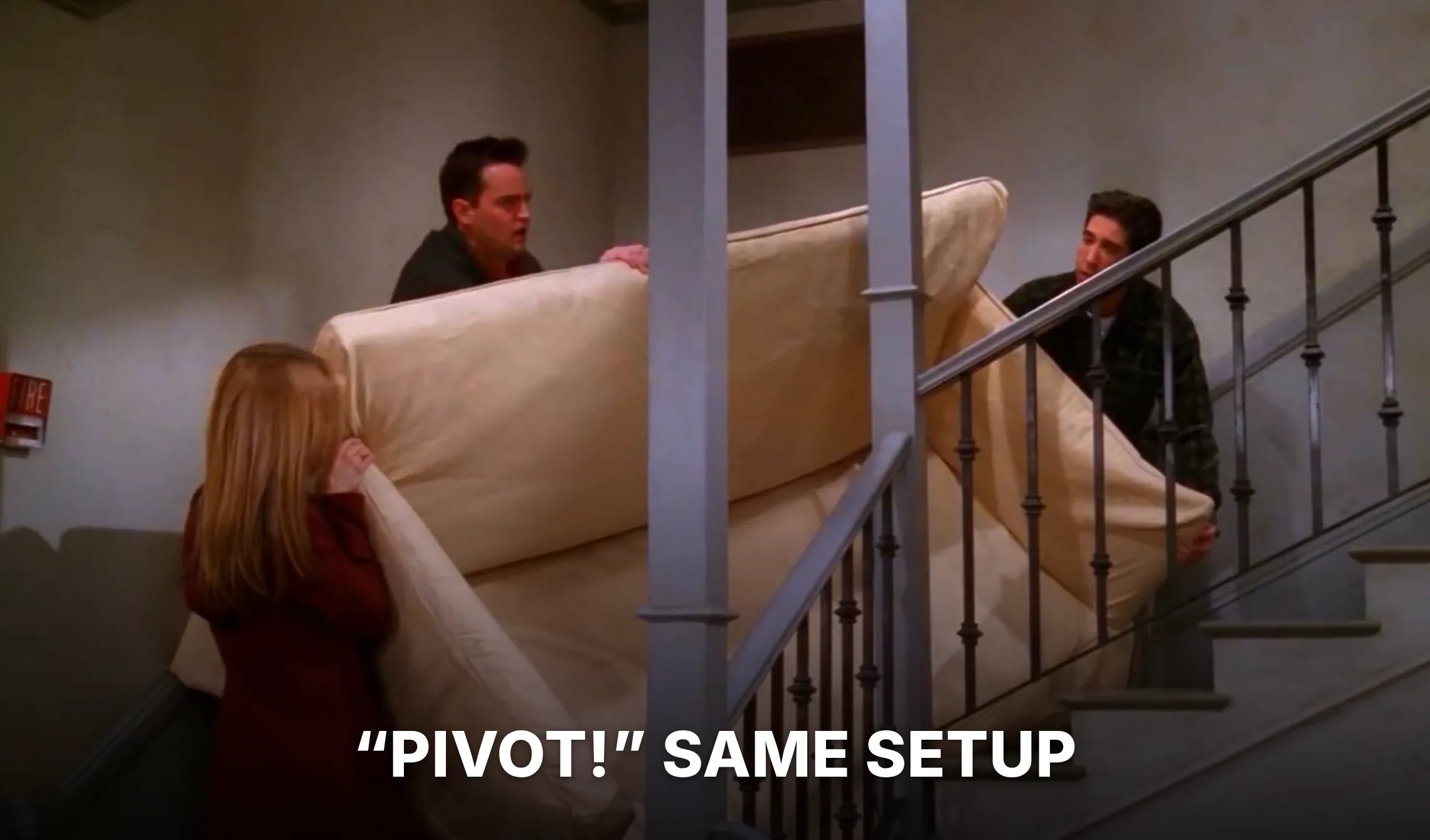
Pivot needs its own definition, because it’s the easiest outcome to blur. A pivot changes something specific: the data, the narrowness of the task, or the model approach. Running the same setup for another month is a new decision, and it goes in the memo.
Step 4. Fix the time box and the budget, including the cost to run it
Vendors quote 3–10 weeks and $15,000–$80,000 for an AI proof of concept. Whatever your number is, fix it before the start, and make sure the PoC measures what the system will cost per request once it runs at volume.
Those ranges come from vendors’ own cost guides: Netguru, Aloa, and Uvik, all updated in 2026. Treat them as a sense of scale. Microsoft suggests keeping 20–30% of the timeline in reserve.
The cost per request is the number that matters later. Gartner’s 2026 Hype Cycle predicts that at least half of generative AI projects will overrun their budgets because of architecture choices and a lack of operating experience. A PoC is the cheapest place to find that out.
Our own pilot runs 4–6 weeks, and its cost counts toward the project if you continue.
If you extend a PoC, write down what changes and what the new end date is.
Step 5. Write the decision memo before you start
Put the hypothesis, the entry conditions, the thresholds, the budget, the name of the person who signs off, and what happens after each outcome on one page. Sign it before the work starts.
Only 31% of companies in the Gartner survey have criteria for stopping a pilot. The memo is how you write yours down. Without it, you get the ending AWS warns about: everyone watches the demo, someone says “that’s really cool,” and no decision follows.
-
Memo
Thresholds and who signs
-
PoC
Fixed time and budget
-
Measure
Against the thresholds
-
Decide
Go, pivot, or no-go
A no-go is a normal result. You paid to learn that this task, on this data, doesn’t meet the bar yet. That answer costs far less than finding it out halfway through a full build. A good memo also says what you keep either way: the test set, the code, and a clear description of the data gaps.
Two AI PoC examples, from hypothesis to decision
Here are two illustrations of the same method, with the details generalized. One passes every step. The other stops at Step 1, before anyone writes code.
Drafting replies to incoming requests. This is the kind of task our own Wizard AI handles: it prepares a draft reply to each new request, and a manager checks it before anything goes to the client.
- Entry conditions. In a typical company, past requests and the replies to them already sit in email or a CRM, so there are real records and known answers. Today’s baseline is the time a manager spends writing a reply from scratch.
- Hypothesis. A manager edits a draft instead of writing each reply.
- Thresholds. Go if managers send most drafts with light edits, faster than writing from scratch, at a cost per draft below the time saved. Pivot if drafts work for one type of request and fail on others: narrow the task to that type. No-go if editing takes as long as writing.
- Why it scopes well. The task is frequent, and a person reviews every draft before it reaches the client, so a weak draft costs a minute of editing.
Draft replies
Go
- Past requests on hand
- Frequent, internal task
- A person checks each draft
Document fields
No-go for now
- No labeled test set
- Data rights unclear
- Fix data, then scope again
Extracting fields from supplier documents. The hypothesis: the model fills in the accounting form, and a person only checks it. Step 1 fails on two counts. Nobody has a labeled set of past documents with correct fields, and the contracts don’t clearly allow sending supplier data to an outside model. The decision is no-go for now: label the cases, clear the legal question, then scope again.
What to read next
The PoC is one step in a longer sequence. Our guide on how to implement AI in business shows where it fits, from the first process to support after launch.
If you have a process in mind, we can look at it together in a free 15–30 minute review, and tell you whether it’s ready for a pilot. Book it here.
- What this guide covers
- Draw the line first: what an AI PoC proves and what it doesn’t
- Why so many PoCs end without a decision
- Step 1. Check the entry conditions: data before scope
- Step 2. Pick one process and write the hypothesis in one sentence
- Step 3. Set the thresholds: what counts as go, pivot, and no-go
- Step 4. Fix the time box and the budget, including the cost to run it
- Step 5. Write the decision memo before you start
- Two AI PoC examples, from hypothesis to decision
- What to read next