03.06.2026
Time to read:
7
min
How to Build a Taxi App
Guides
Development
Taxi app development is a chance to enter one of the most promising and fastest-growing industries. In Russia alone, taxi rides reached 3.29 billion in 2023, up 8% from 2022, while total transaction volume amounted to 1 trillion rubles. These figures show that the taxi market continues to grow, and mobile apps play a key role in that growth.
According to a study by Roskachestvo, the Yandex Go app remains the leader in functionality among taxi booking services, which confirms strong demand for feature-rich solutions.
Today, we’ll explain how to build a taxi app from scratch and create a product that is both functional and in demand.
How a Taxi App Can Generate Revenue
The goal of any business is profit, so your app needs a clear monetization model. Here are four common ways to recover development costs and build a stable revenue stream.
Commission per ride.
Charge a small commission on each trip. For example, you can take 5–10% from every order, with that share going to the platform rather than the driver. The key is to communicate this clearly before users start working through the app.
Advertising or paid in-app promotion.
Another option is to display ads inside the app. Set aside a few placements where advertising will not feel too intrusive — for example, loading screens or the profile section. The main thing is not to overdo it, otherwise ads will start to annoy users.
Paid subscription for users.
You can also offer a subscription model. For a monthly fee, users receive perks such as ride discounts or an ad-free experience. A free trial month is a good idea, since it gives people a chance to evaluate the benefits before committing long-term.

How a Taxi App Works Behind the Scenes
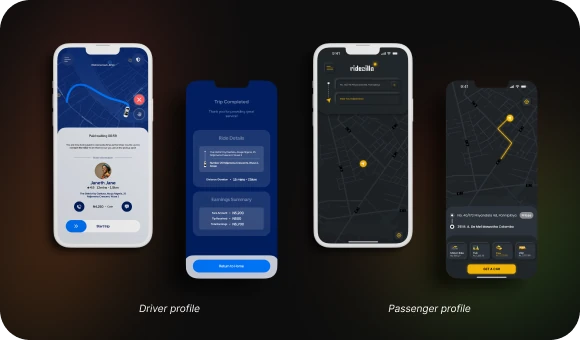
Before building a taxi app, it is important to understand how it functions. There are usually two modes: one for driversand one for passengers.
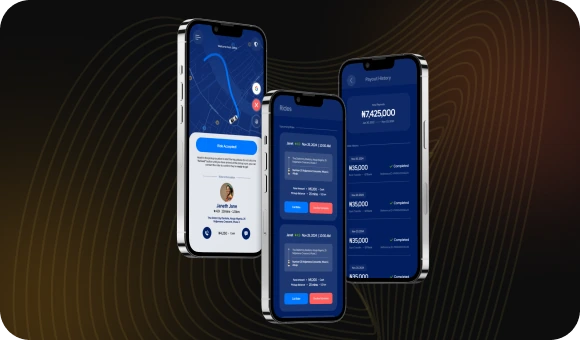
In driver mode, users accept ride requests, receive passenger information, use real-time navigation, and process payments.
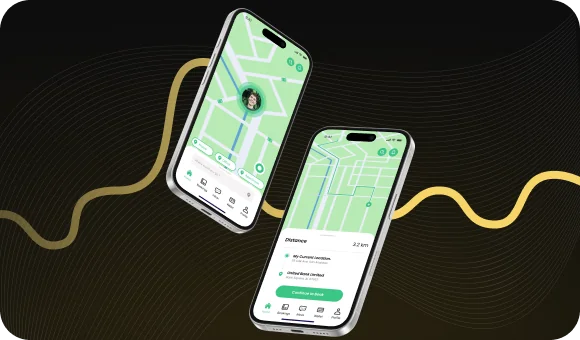
In passenger mode, users can book a ride, view driver profiles, track the car on the map, and pay for the trip directly in the app.
There are two main types of taxi services:
Local taxi apps.
Passengers book rides directly from the companies that develop and operate the service. Users get access to vehicles owned by that specific company and can choose based on their preferences — for example, economy or business class.
Aggregator apps.
Platforms like Bolt, Uber, and Yandex Go connect passengers with drivers from multiple taxi companies. These apps do not manage their own fleet; instead, they act as intermediaries, allowing users to choose from a broad pool of available drivers.
Features for Users
Before talking about functionality, it is important to note that for a taxi service you typically need to build two separate apps — one for passengers and one for drivers. Let’s look at their functionality separately to better understand how a taxi app should work.
Passenger features
Registration
To start using the app, users need to sign up and verify their identity. This not only improves safety, but also creates a sense of trust from the very beginning.
Ride booking
The most important thing is a convenient booking flow. Users should be able to choose a pickup point, destination, vehicle type, and payment method quickly and without extra steps.
Real-time GPS tracking
One of the key features is being able to track the taxi in real time. This helps passengers know when and where to expect the car and manage their time better.
Driver profile view
The app should include driver information — name, photo, car details, and even current location. This matters for safety, because passengers want to be sure they are getting into the right vehicle.
Multiple payment options
A variety of payment methods — from bank cards to mobile wallets — gives passengers flexibility. At the same time, payments must be processed securely.
Fare estimate
The price should be clear in advance. The app should show the estimated fare based on the route so there are no unpleasant surprises at the end of the trip.
Push notifications
Notifications about ride confirmation, vehicle location, and estimated arrival time help passengers stay updated on the trip status.
Chat and communication with the driver
The ability to contact the driver directly in the app — without exchanging phone numbers — is faster and safer for both sides.
Ratings and reviews
After the trip, passengers should be able to leave feedback about the driver and the service. This helps maintain a high quality standard and resolve issues quickly.
Ride history
The platform should store trip history, payments, and ratings. This helps users track expenses and manage their rides.
Customer support
The app should include customer support so users can quickly reach operators via chat or phone in case of ride issues, payment problems, or technical failures. This ensures timely help and builds trust in the service.
Features for Drivers
The driver app includes some similar functionality — registration, communication with passengers, trip history, and push notifications. But it also needs features specifically tailored to drivers’ workflows:
Earnings tracking and management
Drivers should be able to track their income, view trip history, and withdraw earnings through the app. This gives them full visibility into financial performance.
Trip selection
Drivers can set ride preferences based on distance, passenger rating, or offered fare. This helps them choose the most profitable and convenient orders for their driving style.
Navigation
The app should provide traffic information, alternative routes, and turn-by-turn navigation. These tools help drivers choose the best route, reach the passenger quickly, and complete the ride efficiently.
Tips for Building a Competitive Product
Now let’s move on to the features that can help answer the question of how to create a taxi app that stands out in the market and delivers clear value to users.
Nice perks for both passengers and drivers
Create bonuses and incentives for both sides. For passengers, you can offer referral rewards, loyalty programs, or discounts to encourage repeat usage and word of mouth. For drivers, rewards tied to trip volume or positive ratings can motivate better service.

Personal safety for everyone involved
Safety is critical in a taxi service. Pay special attention to integrating third-party technologies and services that help the app meet security requirements. Useful features include an SOS button, quick access to emergency services, and driver verification.
Protection of personal data
The platform should protect passenger and driver information with strong security systems. Sensitive data such as phone numbers and payment details must be encrypted and used only for providing the service.
Stages of Building a Successful Taxi App
Now let’s move on to the main part — development. Creating a mobile interface itself is not difficult, but building a high-quality product that meets both your expectations and user needs requires careful planning.

1. Define the target audience
Before development begins, it is important to understand who will use the platform. Study the age, interests, needs, and geography of your potential users. Based on that, you can design features and interfaces that truly fit their expectations.
2. Analyze competitor apps
This stage helps you understand what already exists on the market and identify competitors’ strengths and weaknesses. That insight will help you make your app unique and offer users something new.
3. Define the functionality and write the technical specification
Use the MVP principle to focus on core functionality and avoid wasting resources.
At the beginning, it is better to focus on the essential features required for the app to work. Additional functions can always be added later. After that, prepare a detailed technical specification describing the functionality you have planned.

4. UX/UI design
At the UX/UI design stage, focus on creating an intuitive interface that makes the app easy to use. Users should be able to navigate it effortlessly and book a taxi quickly. The interface should be visually appealing and easy to understand.
5. Development and testing
Finally, it is time to build the final version of the product. Developers write the code, integrate third-party services, and carry out thorough testing. The app’s functionality is checked and any discovered issues are fixed. Only then is it ready to be launched in the app stores.
Special attention should be paid to the tools and platforms you use for development. Consider technologies that allow you to launch on both iOS and Android, so the team can work on both versions simultaneously and save time and resources.
6. App store release and promotion
Once all improvements and testing are complete, it is time to launch the app on the platforms. Promote it through social media, influencers, and other channels to attract users. Analytics can then help you measure effectiveness and identify areas for improvement.

7. App growth and support
After release, it is important to provide ongoing technical support. Developers should update the product regularly so it remains compatible with new operating system versions, while also taking user feedback into account and continuously improving the app.
Conclusion
We hope this article has answered the question of how to build a taxi app. Developing this kind of service can open up new opportunities for your business, especially given how popular and in-demand the taxi industry is today.
The most important thing is to create a convenient interface, think through the key functionality, and take user needs into account.
Building a high-quality product requires a professional approach, and Beetrail is ready to become your reliable partner at every stage.
We create solutions that help businesses grow by adapting to changing market demands and audience expectations.
Beetrail knows how to turn your idea into a successful app. We handle full-cycle development — from concept to publication and ongoing support.
Take a look at our projects and submit a request using the form below. We’ll be happy to discuss your goals and help estimate the cost.
Your app is our responsibility.
How a Taxi App Can Generate Revenue
The goal of any business is profit, so your app needs a clear monetization model. Here are four common ways to recover development costs and build a stable revenue stream.
Commission per ride.
Charge a small commission on each trip. For example, you can take 5–10% from every order, with that share going to the platform rather than the driver. The key is to communicate this clearly before users start working through the app.
Advertising or paid in-app promotion.
Another option is to display ads inside the app. Set aside a few placements where advertising will not feel too intrusive — for example, loading screens or the profile section. The main thing is not to overdo it, otherwise ads will start to annoy users.
Paid subscription for users.
You can also offer a subscription model. For a monthly fee, users receive perks such as ride discounts or an ad-free experience. A free trial month is a good idea, since it gives people a chance to evaluate the benefits before committing long-term.
How a Taxi App Works Behind the Scenes
Before building a taxi app, it is important to understand how it functions. There are usually two modes: one for driversand one for passengers.
In driver mode, users accept ride requests, receive passenger information, use real-time navigation, and process payments.
In passenger mode, users can book a ride, view driver profiles, track the car on the map, and pay for the trip directly in the app.
There are two main types of taxi services:
Local taxi apps.
Passengers book rides directly from the companies that develop and operate the service. Users get access to vehicles owned by that specific company and can choose based on their preferences — for example, economy or business class.
Aggregator apps.
Platforms like Bolt, Uber, and Yandex Go connect passengers with drivers from multiple taxi companies. These apps do not manage their own fleet; instead, they act as intermediaries, allowing users to choose from a broad pool of available drivers.
Features for Users
Before talking about functionality, it is important to note that for a taxi service you typically need to build two separate apps — one for passengers and one for drivers. Let’s look at their functionality separately to better understand how a taxi app should work.
Passenger features
Registration
To start using the app, users need to sign up and verify their identity. This not only improves safety, but also creates a sense of trust from the very beginning.
Ride booking
The most important thing is a convenient booking flow. Users should be able to choose a pickup point, destination, vehicle type, and payment method quickly and without extra steps.
Real-time GPS tracking
One of the key features is being able to track the taxi in real time. This helps passengers know when and where to expect the car and manage their time better.
Driver profile view
The app should include driver information — name, photo, car details, and even current location. This matters for safety, because passengers want to be sure they are getting into the right vehicle.
Multiple payment options
A variety of payment methods — from bank cards to mobile wallets — gives passengers flexibility. At the same time, payments must be processed securely.
Fare estimate
The price should be clear in advance. The app should show the estimated fare based on the route so there are no unpleasant surprises at the end of the trip.
Push notifications
Notifications about ride confirmation, vehicle location, and estimated arrival time help passengers stay updated on the trip status.
Chat and communication with the driver
The ability to contact the driver directly in the app — without exchanging phone numbers — is faster and safer for both sides.
Ratings and reviews
After the trip, passengers should be able to leave feedback about the driver and the service. This helps maintain a high quality standard and resolve issues quickly.
Ride history
The platform should store trip history, payments, and ratings. This helps users track expenses and manage their rides.
Customer support
The app should include customer support so users can quickly reach operators via chat or phone in case of ride issues, payment problems, or technical failures. This ensures timely help and builds trust in the service.
Features for Drivers
The driver app includes some similar functionality — registration, communication with passengers, trip history, and push notifications. But it also needs features specifically tailored to drivers’ workflows:
Earnings tracking and management
Drivers should be able to track their income, view trip history, and withdraw earnings through the app. This gives them full visibility into financial performance.
Trip selection
Drivers can set ride preferences based on distance, passenger rating, or offered fare. This helps them choose the most profitable and convenient orders for their driving style.
Navigation
The app should provide traffic information, alternative routes, and turn-by-turn navigation. These tools help drivers choose the best route, reach the passenger quickly, and complete the ride efficiently.
Tips for Building a Competitive Product
Now let’s move on to the features that can help answer the question of how to create a taxi app that stands out in the market and delivers clear value to users.
Nice perks for both passengers and drivers
Create bonuses and incentives for both sides. For passengers, you can offer referral rewards, loyalty programs, or discounts to encourage repeat usage and word of mouth. For drivers, rewards tied to trip volume or positive ratings can motivate better service.
Personal safety for everyone involved
Safety is critical in a taxi service. Pay special attention to integrating third-party technologies and services that help the app meet security requirements. Useful features include an SOS button, quick access to emergency services, and driver verification.
Protection of personal data
The platform should protect passenger and driver information with strong security systems. Sensitive data such as phone numbers and payment details must be encrypted and used only for providing the service.
Stages of Building a Successful Taxi App
Now let’s move on to the main part — development. Creating a mobile interface itself is not difficult, but building a high-quality product that meets both your expectations and user needs requires careful planning.
1. Define the target audience
Before development begins, it is important to understand who will use the platform. Study the age, interests, needs, and geography of your potential users. Based on that, you can design features and interfaces that truly fit their expectations.
2. Analyze competitor apps
This stage helps you understand what already exists on the market and identify competitors’ strengths and weaknesses. That insight will help you make your app unique and offer users something new.
3. Define the functionality and write the technical specification
Use the MVP principle to focus on core functionality and avoid wasting resources.
At the beginning, it is better to focus on the essential features required for the app to work. Additional functions can always be added later. After that, prepare a detailed technical specification describing the functionality you have planned.
4. UX/UI design
At the UX/UI design stage, focus on creating an intuitive interface that makes the app easy to use. Users should be able to navigate it effortlessly and book a taxi quickly. The interface should be visually appealing and easy to understand.
5. Development and testing
Finally, it is time to build the final version of the product. Developers write the code, integrate third-party services, and carry out thorough testing. The app’s functionality is checked and any discovered issues are fixed. Only then is it ready to be launched in the app stores.
Special attention should be paid to the tools and platforms you use for development. Consider technologies that allow you to launch on both iOS and Android, so the team can work on both versions simultaneously and save time and resources.
6. App store release and promotion
Once all improvements and testing are complete, it is time to launch the app on the platforms. Promote it through social media, influencers, and other channels to attract users. Analytics can then help you measure effectiveness and identify areas for improvement.
7. App growth and support
After release, it is important to provide ongoing technical support. Developers should update the product regularly so it remains compatible with new operating system versions, while also taking user feedback into account and continuously improving the app.
Conclusion
We hope this article has answered the question of how to build a taxi app. Developing this kind of service can open up new opportunities for your business, especially given how popular and in-demand the taxi industry is today.
The most important thing is to create a convenient interface, think through the key functionality, and take user needs into account.
Building a high-quality product requires a professional approach, and Beetrail is ready to become your reliable partner at every stage.
We create solutions that help businesses grow by adapting to changing market demands and audience expectations.
Beetrail knows how to turn your idea into a successful app. We handle full-cycle development — from concept to publication and ongoing support.
Take a look at our projects and submit a request using the form below. We’ll be happy to discuss your goals and help estimate the cost.
Your app is our responsibility.